Priceless lessons in how to replace a very short list of unproductive practice habits with a very short list of highly productive practice habits…
Please invest just one hour of your time and energy to embrace these lessons on how to study and practice the right things the right way. Doing so will reward you with a lifetime of fun and efficient learning, guaranteed!
Table of Contents
Fundamental Failures of Music Education
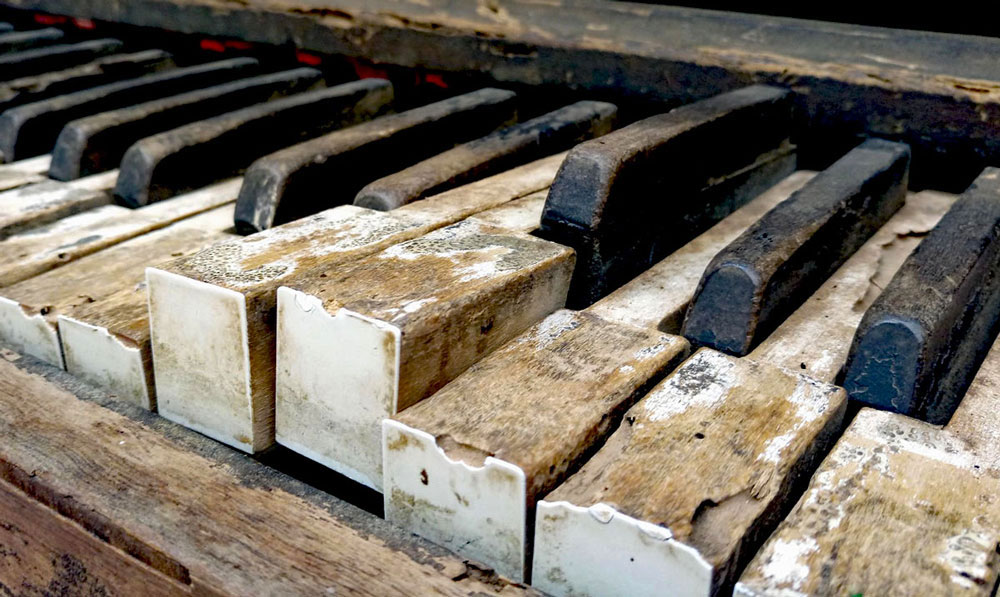
It’s no wonder that most students quit playing piano–given so many fundamental failures in the way that music is taught.
At least eight such teaching failures come to mind…
- Teachers don’t teach students effective study and practice habits.
- Students are “taught” to play notation, not music.
- Teachers don’t teach students how the piano works.
- Teachers keep regurgitating the myth that finger training is the path to fluent Piano Technique.
- Teachers show the result but not the process for achieving that result (likely because the teacher doesn’t even understand how they do it themselves).
- Teachers teach Music Theory as if it’s just a collection of definitions–without connecting the theory to experience and how music works.
- Teachers don’t teach music theory properly. They teach what a musical something is, without any understanding of what that musical something does. (And so, the student can get an A+ on a music theory test without ever understanding how music works!)
- Teachers don’t teach students how or give students opportunities to overcome Performance Anxiety as part of their teaching practice.
The consequences of such poor teaching failures are absolutely predictable. At best, the most conscientious students become mediocre at kind of sort of playing music they cannot hear and do not understand. And the rest of the eager students give up trying as their sincere efforts are met with frustration–mistakenly and tragically coming to believe that they are untalented.
back to… Table of Contents
The Four Stages of Competence
Did you know that there are four stages of competence on the path to learning new information or a new skill?

Stage 1: Unconscious incompetence
This is the state on not knowing what you don’t know.
Stage 2: Conscious Incompetence
This is the state of being aware of what you don’t know… and realizing you have something to learn.
Stage 3: Conscious Competence
This is the state of studying and practicing something well enough to explain it to yourself and to others.
Stage 4. Unconscious Competence
This is the state of having studied and practiced something so deeply that you can apply it and express yourself without having to think about it.
IMPORTANT: The secret to graduating to stage 4 is no secret. You, me, and everyone all get there the same way: by studying and practicing the right things the right way! Keep on browsing!
back to… Table of Contents
The Proper Mindset
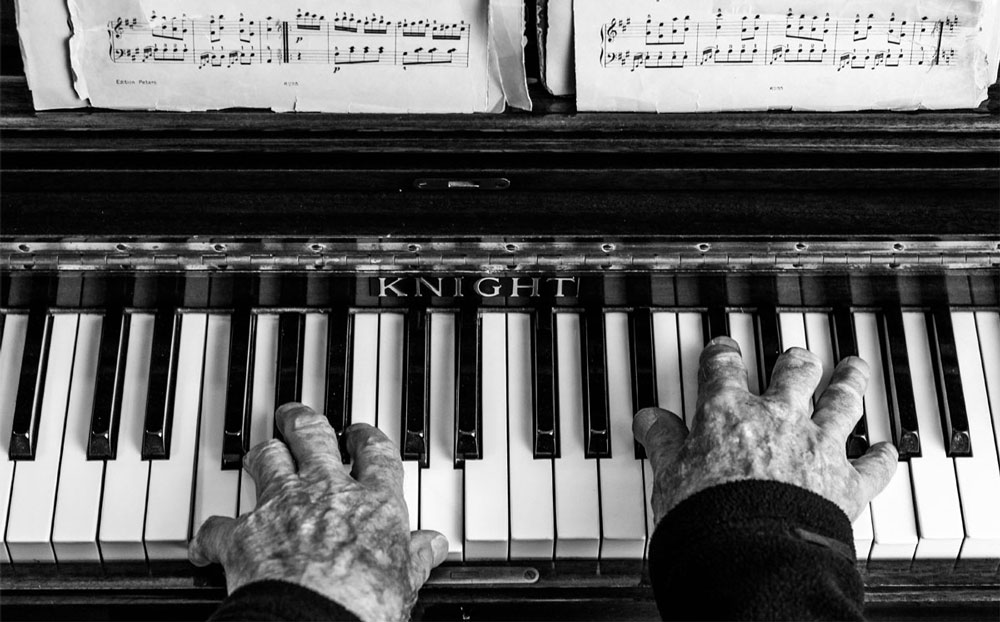
The quality of your music-making is absolutely determined by the quality of your study and practice habits!
Watch on YouTube…
Twenty-Two Takeaways
Twenty-two insights and principles that will get your whole attitude regarding studying and practicing moving in the right direction…
- The quality of your performance is absolutely determined by the quality of your study and practice habits.
- The real reason you are not making progress is typically not that you are untalented, but that you are studying and practicing the wrong way.
- The reason you make mistakes and seem to forget the music when you perform is that you never really learned the music properly in the first place.
- Quality first, quantity second. In other words, five minutes of mindful attention beats five hours of mindless repetition.
- If you study and practice the right things the right way you should expect super-fast progress… not painfully slow kind of sort of progress only after years and years and years of arduous effort.
- Every aspect of music-making… including how you conceive the music, how you perceive the music with your senses, and how you move your muscles… is controlled by your brain. Not some of it… not most of it… all of it! Therefore, the goal of studying and practicing is always… not sometimes… not most of the time… always… to change your brain.
- Because your muscles do exactly what your brain tells them to do, every mistake is a mental, not a physical, error. To use a computer analogy, when you’re having difficulty playing a piece of music, there’s nothing wrong with your hardware. When you’re having difficulty playing a piece of music, it’s because you are running inefficient or buggy software.
- Music is a language… a language that is unique, universal, and un-translatable… with its own wordless grammar and vocabulary. And so, studying and practicing the right way is the process of learning how to speak the language of music.
- Your brain is naturally wired to seek, appreciate, and respond to patterns. It enjoys patterns. It does not enjoy randomness. Once your brain recognizes a musical pattern, it doesn’t have to “try” to remember it. It a becomes permanent part of your musical mind.
- Studying and practicing the right way engages all FOUR Musical Intelligences: Aural (how you want the music to sound and feel), Analytical (your theoretical understanding of the musical patterns), Visuospatial (the arrangement and sequence of notes on the keyboard), and Kinesthetic (the Fingering & Choreography).
- If you study and practice with all four musical intelligences engaged, you are doing more than merely memorizing the music. You are internalizing the music in multiple dimensions that mutually reinforce each other. So, instead of just kind of sort of knowing the music “by finger”, you’re understanding the music with your ears, brains, eyes, and muscles.
- Studying and practicing the right way… with all four musical intelligences engaged… builds enormous confidence when you perform… and is the best antidote to stage fright.
- If you study and practice the right way… with all four musical intelligences engaged… your musical intentions will automatically trigger the appropriate choreography when you perform.
- Every growing musician should be doing two things simultaneously: Adding music you love to your REPERTOIRE… and working on your general musicianship.
- Each piece of music you play is a unique combination of patterns… that you want to get into your ears, intellect, eyes, and muscles. To that end, general musicianship… things like scales, chords, chord voicings, chord progressions, tonality, form, meter, and rhythm… properly studied… give you the knowledge and skills required to hear, understand, see, and execute these patterns.
- Any behavior that you repeat eventually becomes an unconscious habit. In other words, practice makes permanent. In other other words, poor practice habits make it is possible to become quite “skilled” at making mistakes. So, you must be extremely careful about what and how you practice.
- Never ignore a mistake. A mistake is like a good friend telling you that you have something to learn… But a mistake is valuable only if you have the honesty, humility, and discipline to address it constructively. THIS is the hard part of learning to play the piano and what mastery is made of.
- You will never master something by repeating it poorly over and over and over again, hoping that it will someday, somehow become easy. In fact, you are just making matters worse by ingraining bad habits.
- When something is wrong, the very worst thing you can do is play it again the exact same way. To put into positive terms… If at first you don’t succeed… please do try again, but try again in a different way… by thinking about it in a different way and moving your body in a different way.
- What lots of people consider practicing is little more than mindless repetition and a bunch of bad habits… typically always starting at the beginning of the piece… typically going back to the beginning after making a Boo Boo… typically “practicing” at a tempo faster than you can play accurately… typically “practicing” with sloppy rhythm… and typically “practicing” with sloppy technique. Of course, this is not studying or practicing at all. It’s just playing poorly over and over and over again… and ingraining bad habits even deeper.
- Talent alone can take you only so far… The key to success is as simple to say as it is hard to do: If you want to get good, you have to change your study and practice habits!
- Getting good is the inevitable… I repeat INEVITABLE… reward for replacing a very short list… I emphasize… a very SHORT list… of UN-productive habits with a very short list… and I emphasize… a very SHORT list… of productive study and practice habits… to be explored in depth in the next video! I look forward to seeing you there!
back to… Table of Contents
Scaffolding (The Zone of Proximal Development)
Lesson Goal: To understand the Zone of Proximal Development and how to use Scaffolding to maximize learning…
The Zone of Proximal Development & Scaffolding Defined
Introduced by Russian psychologist Lev Vygotsky in the 1930s, the Zone of Proximal Development is the gap between what a learner has already mastered and what they can potentially master given the right kinds of support.
Just as scaffolding is erected, then gradually removed from a building as construction progresses, scaffolding is the process in which a teacher provides temporary supports to facilitate a learner’s understanding of new concepts and mastery of new skills. The teacher typically provides a great deal of support at first and then gradually withdraws the support until the student understands the new concept or can perform the new skill independently.
Examples of Scaffolding in Action
Scaffolding might best be understood by giving practical examples:
- Using training wheels when learning to ride a bicycle, followed by a parent helping the child to steer and balance until they can ride independently.
- Tracing a picture before drawing it freely.
- Explaining concept using analogies & metaphors.
- Breaking down a complex task into several simple tasks.
- Using a safety harness to learn a new move gymnastics.
- Modeling the desired skill or behavior so the student can watch and imitate it.
- Offering hints or feedback to guide learners through difficult tasks.
- Connecting new concepts to things the student already knows.
- Encouraging students to work together and learn from one another.
- Giving emotional support and encouragement to keep trying when things get tough.
- Can you think of some others?

Implications of Scaffolding for Teachers & Students
The implications for teachers cannot be over-stated:
- Humans learn best and experience peak motivation when working on tasks that are just beyond their current abilities.
- If the new material is too difficult, no progress will be made… and the student might become frustrated, feel incompetent, and give up trying: “I’m just can’t do it.” (This situation is no fun for the teacher either, who might also feel frustrated and question their own competence).
- If the new material is too easy, no learning will occur… and the student may feel bored: “Why am I doing this?”
- If the new material is a bit of a stretch, progress will be made with the right supports… with the bonus effect that the student will feel competent and confident: “Hey, I can do this!”
- And so, all great teachers always meet the student where the student “is”, not where the teacher “is” and do their level best to teach in their student’s zone of proximal development–by providing new opportunities and supports slightly beyond their current knowledge base and skill level.
- This doesn’t mean that the teacher must “dumb down” the material. It means that the teacher must use language, examples, hints, imagery, and supports that the student can relate to. In order to do so, the teacher must know their student, by understanding what the student already knows, what their goals are, and what they are ready for.
- This doesn’t mean that learning is 100% the teachers responsibility. The student must be willing to study and try. (Alas, most students tend to give up before even trying. Teacher’s fault? Student’s ‘fault? A huge topic better saved for another day.)
- Over time, students learn more than just the material. They also develop effective study and practice habits as well as the “can do” confidence that the kind of effort always produces results… and internalize the proper attitudes and habits that enable them to become their own teacher.
back to… Table of Contents
Habits-R-Us
The progress you make in playing piano is absolutely determined by the quality of your study and practice habits!
The reason you fail to make progress is NOT because you are untalented!

The highly likely reason you are frustrated is that you are studying and practicing the wrong things the wrong way. In other words, lack of progress is the absolutely predictable result of having unproductive practice habits!
The key to success is utterly simple: Replace a very short list of bad habits with a very short list of good habits!
How to Study-Practice: Habits (YouTube)…
Practice Habits Video Highlights
The open secrete: Getting good is the inevitable… I repeat INEVITABLE… reward for replacing a very SHORT list… of UN-productive habits with a very short list of productive study and practice habits!
So, what are these highly-effective and efficient study and practice habits? Here are my top eight in no particular order…
- Stop Wasting Time!!!
- Study & Practice in Small Doses, Repeated Often.
- Quality First, Quantity Second.
- Record Everything…
- Divide & Conquer.
- Slow. Things. Down.
- Play with a Metronome or Rhythm Track.
- Rehearse Mentally away from the Piano.
Practice Habit #1. Stop Wasting Time!!!

This is so important that we need to scold ourselves with three exclamation points… STOP WASTING TIME!!!
And so vitally important that I’m going to say it again: STOP. WASTING. TIME!!!
Common Time Wasters
Alas, there’re at least four very common ways that we waste time at the piano…
Time Waster #1. Studying and practicing pieces that we do not love to play… and that we have no intentions of keeping in our repertoire.
Time Waster #2. Mindlessly “practicing” things we already know how to play… typically by always starting at the very beginning of piece, when the thing we really need to work on is on the middle of page 3.
Time Waster #3. The horrible habit of always going back to the beginning of a piece when we make a mistake.
Time Waster #4. Studying and practicing stuff that does not help us perform better. Specifically, wasting precious time doing contrived mechanical exercises. (Hint: If you want to get good at Bach, study Bach. If you want to play Jazz, study Jazz. There you will discover the musical patterns and technical problems that are particular to the music that you want to play.)
Gentle Reminder: The quality of your performance is absolutely determined by the quality of your study and practice habits. In other words, the gift is not talent. The gift is love. If you love what your are doing, the discipline will follow!
BTW, I could have put this in positive terms, but I think scolding ourselves with three exclamation points is a more effective way to get the point across.
So I am going to say it again: STOP. WASTING. TIME!
back to… Table of Contents
Practice Habit #2. Small Doses, Repeated Often.

In other words, doing a little bit every day beats doing a lotta bit once a week.
To be more specific, five minutes every day beats one hour once a week for at least two huge reasons:
First, cramming is inefficient. Because your brain, like a sponge, can absorb only so much so fast before it becomes saturated and needs to rest. (See: How Your Brain Works: Soak Time).
And second, every time you go to sleep your brain does something amazing. It automatically stores what you studied and practiced that day in your long-term memory. And so, if you study and practice every day, you take full advantage of every sleep to make your musical mind grow! (See: How Your Brain Works: Consolidation).
Gentle Reminder: The quality of your performance is absolutely determined by the quality of your study and practice habits. In other words, the gift is not talent. The gift is love. If you love what your are doing, the discipline will follow!
back to… Table of Contents
Practice Habit #3. Quality First, Quantity Second.

In other words: Study First, Practice Second!!!
In other other words, physical repetition is important… but only after (emphasis AFTER) you have studied the music using all four musical intelligences… EARS, INTELLECT, EYES, MUSCLES!!!
Let’s take them one at a time and how they relate to the quality of your practice habits…
Ears (Aural Musical Intelligence)
Quality means doing more than just playing symbols (S Y M B O L S). You want to play SOUNDS that you are hearing in your minds’ ear. And you want to do more than merely play accurately. You want to play expressively! It’s amazing how having a crisp and clear musical intention will transform the quality of your performance.
Intellect (Analytical Musical Intelligence)
Quality means using your knowledge of music theory to discover the patterns in the music you are learning. Instead of just brute force note-by-note memorization, you will understand what you are playing as meaningful musical chunks.
Eyes (Visuospatial Musical Intelligence)
Quality means having a clear visuospatial image of the arrangement and sequence of notes on the keyboard in you mind’s eye… seeing not just one-note-at-a time, but as a complete musical pattern.
Muscles (Kinesthetic Musical Intelligence)
Quality means using a fingering that is both mentally and physically easy and experimenting to discover a natural, musical choreography that accurately expresses your musical intentions. Only then should you do mindful repetitions in order to make that choreography automatic.
Gentle Reminder: The quality of your performance is absolutely determined by the quality of your study and practice habits. In other words, the gift is not talent. The gift is love. If you love what your are doing, the discipline will follow!
back to… Table of Contents
Practice Habit #4. Record Everything

If I was allowed to give one and only one piece of advice to all piano students, it’s this:
Record yourself, listen to the playback immediately, and ask yourself: Is THAT what you intended to play?
… Paying attention to everything…
- Are the notes and rests accurately played?
- Does your tempo unintentionally speed up or slow down?
- Are there any hesitations?
- Are there unintended accents?
- Are the dynamics, phrasing, and articulations what you meant to express?
- Can you think of some others?
And if you hear or feel something you’re not happy with, do something constructive with what you just learned. And do it immediately by experimenting with a different way to play, hear, think about, see, and move your body in order to achieve your desired goal.
BTW, if you are an imperfect human being like me, expect to hear things in the recording that you did not notice while you were playing. While this can be quite the humbling experience, I can’t think of enough superlatives to convey how critically-important such feedback is to building your self-awareness and elevating your standards of what it means to play like a real musician.
Gentle Reminder: The quality of your performance is absolutely determined by the quality of your study and practice habits. In other words, the gift is not talent. The gift is love. If you love what your are doing, the discipline will follow!
back to… Table of Contents
Practice Habit #5. Divide & Conquer

Did you ever notice how you can play the first few bars of a piece so much better than the rest?
And did you ever notice that, when you are having difficulty playing a piece, there’s probably just one or a just few places that are causing you trouble?
So, if you want to get good, you must break the time-wasting habit of “practicing” a piece by always starting at the beginning… and then compounding THAT horrible habit with yet ANOTHER horrible habit by going back to the beginning when you make a mistake, hoping by some miracle that things will just work out right…
The solution, of course, is to break each piece into sections… and each section into phrases… and each phrase into subphrases… and so on… until you’ve broken the music up into digestible chunks… and then to study and practice them accordingly.
What does digestible mean?
Digestible means small enough to pay full attention to what you need to pay attention to. In other words, small enough to fit into your short-term memory… where the music can be absorbed using all four musical intelligences: ears, intellect, eyes, and muscles.
And when you have identified a weak area, you must relentlessly go after each and every insecurity like a brain surgeon… where no detail is too small: every note, rest, fingering, articulation, every gesture.
For particularly difficult spots, a digestible chunk may be no bigger than a single chord or a single beat or a particular transition.
Another way to divide and conquer that might be appropriate is to study and practice each hand separately… for particularly troublesome spots that you can give your full attention with your ears, intellect, eyes, and muscles.
The Payoffs
There are at least two huge benefits of dividing and conquering:
Benefit #1. Instead of just ONE memory trigger point, at the beginning, you will have multiple memory trigger points… and will be able to start any musical phrase with the same conviction and confidence as the beginning!
And Benefit #2. You will learn a lot more music in a lot less time. Think of it this way… Suppose it took you 5 minutes to play through an entire piece, but that the part that was causing you trouble was only 5 seconds long… If you just focused on the problem part, you could practice that particular spot 12 times in one minute instead of mindlessly playing the whole piece one time in five minutes!
Gentle Reminder: The quality of your performance is absolutely determined by the quality of your study and practice habits. In other words, the gift is not talent. The gift is love. If you love what your are doing, the discipline will follow!
back to… Table of Contents
Practice Habit #6. Slow. Things. Down.
Slow. Things. Down.

Everybody knows that slow practice works wonders for your playing, but how slow is slow?
- Slowly enough to pay attention to what you need to pay attention to.
- Slowly enough to be aware of the sounds you are making (Ears).
- Slowly enough to think analytically about the patterns you are playing (Intellect).
- Slowly enough to visualize the arrangement and sequence of notes on the keyboard (Eyes).
- Slowly enough to feel the sensations created by your body movements (Muscles).
- And slowly enough to play accurately… with a clear musical intention, correct notes, good rhythm, and natural choreography.
Six Huge Benefits of Slowing Things Down
- Slow playing gives your four musical intelligences time to be fully conscious of what your brain is doing.
- Slow playing gives you enough time to always play accurately… which is absolutely essential for training your brain to move your muscles repeatably and reliably in response to your musical intentions.
- Slow playing exposes every physical and mental insecurity… things that easily go unnoticed at performance tempo.
- Slow playing gives you lots of time to think… and therefore is a great way to test if you really do know everything you think you know about a piece.
- Slow playing allows sufficient soak time for the information in your short-term memory to transfer to your long-term memory where it can become permanent. In doing so, you will discover that you have memorized a piece without even trying.
- Slow playing gives you lots of time to think… and therefore is a great way to test if you really do know everything you think you know about a piece.
Gentle Reminder: The quality of your performance is absolutely determined by the quality of your study and practice habits. In other words, the gift is not talent. The gift is love. If you love what your are doing, the discipline will follow!
back to… Table of Contents
Practice Habit #7. Play with a Metronome or Rhythm Track
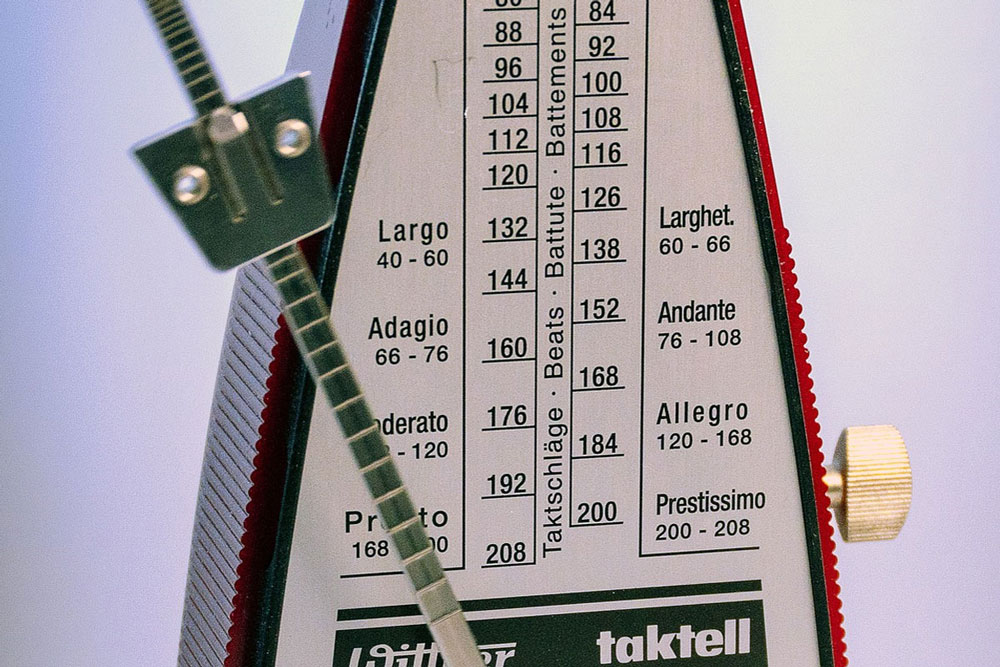
Practicing with a metronome or rhythm track has the power to transform your playing!
If you’re playing the right notes, but your music just doesn’t seem to flow, you almost certainly have one or all of the following three issues:
- You do not have a clear conception (aural, analytical, visuospatial, kinesthetic) of how you want the music to sound and feel.
- Your conception or perception of the rhythm is distorted somehow. For example, you might mistakenly think a note is “here” within the meter, but it really belongs somewhere else.
- Some kind of hitch…. a tension or awkwardness in your physical execution is upsetting your intended timing.
How to Solve a Problem with Rhythm
Anyway, playing along with a metronome or a rhythm track goes a long way to exposing the problem… a problem that you can then address using the other study-practice habits you already know.
BTW, you might also supplement playing with a metronome or rhythm track in at least six ways that will really help you internalize the rhythm…
- Count the Meter Out Loud… for example: 1 & 2 & 3 & 4 & 1 & 2 & 3 & 4 &…
- Scat the Rhythm… meaning vocalizing the rhythm of what you are playing. babbadabbadbabbabad…
- Sway your Body or Bob your Head or Tap your Feet or do all three.
- Combine this with Slow Playing… I guarantee that you can always find a tempo slow enough to play accurately. Always!
- Play One Hand at a Time and clap time on your lap with your non-playing hand.
- After recording yourself, stand up and see if you can Stroll, Swagger, March, or Dance to the Playback.
A Word of Caution. The metronome, used appropriately, can be a valuable teacher, but do not let it become a tyrant. Use it as needed to diagnose a blind spot with rhythm or to solve a technical problem, but do not become a slave to a lifeless ticker. The reason to be able to play accurately in time is so that you can go beyond robotic precision to play musically and artistically!
Gentle Reminder: The quality of your performance is absolutely determined by the quality of your study and practice habits. In other words, the gift is not talent. The gift is love. If you love what your are doing, the discipline will follow!
back to… Table of Contents
Practice Habit #8. Rehearse Mentally away from the Piano

Once you’ve gotten familiar with a piece or phrase of music, try closing your eyes and imagine everything about it in your musical mind… making full use of all four musical intelligences (Ears, Intellect, Eyes, and Muscles)…
- Use your aural musical intelligence to imagine the sounds you want to make (your mind’s ear).
- Use your analytical musical intelligence to imagine the musical patterns you’re playing (using your knowledge of music theory).
- Use your visuospatial musical intelligence to imagine the arrangement and sequence of the notes on the keyboard (your mind’s eye).
- And use your kinesthetic musical intelligence to imagine the fingering, choreography, and the sensation of your muscles moving in response to your musical intentions.
Doing these things is extremely effective because it requires you to slow down and really concentrate on every detail.
And, as a bonus, such mental rehearsal enables you to study and practice almost anytime and anywhere even without a piano: while taking a walk, being stuck in traffic, or waiting in line at the store!
Gentle Reminder: The quality of your performance is absolutely determined by the quality of your study and practice habits. In other words, the gift is not talent. The gift is love. If you love what your are doing, the discipline will follow!
back to… Table of Contents
Three Words of Encouragement
#1. While it takes a long time to talk about these practice habits, it doesn’t take long at all to actually practice them. In fact, you do most of them simultaneously… and in just a few heartbeats!
#2. If you make these habits a regular part of study and practice sessions, you will not only elevate the quality of your playing, but you will learn lots more music in just a fraction of the time… transforming all your frustration and self-doubt into feelings of competence and confidence that will become self-motivating when you see the results.
#3. And finally… Each of these study and practice habits is quite simple and easy to do. The problem, of course, is that they are also easy NOT to do! THIS is the chasm that separates us from getting good, but do know this: The discipline required to do them is a CHOICE, not a talent… a choice that’s available to every one of us at this very moment.
back to… Table of Contents
Studying, Practicing, Exercising

Studying, Practicing, and Exercising are three very different behaviors with three very different goals…
Studying Defined
Studying is the act of focusing ones attention on something with the goal of learning a fact, concept, principle, skill, and so on. Studying reorganizes many electro-chemical connections in your brain and typically requires lots of mental effort.
Practicing Defined
Practicing is the act of repeating a complex motor activity until it becomes automatic. This process, where the motor pathways in your sub-conscious brain are reorganized, is called automatization.
Exercising Defined
Exercising is the act of imposing physical stresses on your muscles, ligaments, tendons, bones, heart, and lungs with the goal of improving strength, endurance, flexibility, etc. Repetitive exertions such as running, stretching, swimming, and lifting weights will accomplish this goal. While there might be incidental benefits to your thinking due to increased blood flow to the brain and general well-being, your brain is not meaningfully altered by such physical exertions.
Implications for Piano Students
Practicing, as done by most, is typically just doing something the wrong way over and over and over again hoping for a miracle that never comes.
If you want to play like an artist, you must reject the widespread myth that getting good is accomplished by doing physical exercises.
This is so important that it needs to be repeated: It is a huge mistake to believe that you need to do exercises in order to play the piano.
Why? Because fluent piano technique is NOT achieved by building strength and endurance. Fluent piano technique is achieved by changing the neural networks in your brain!
In fact, you control everything with your brain. And that includes moving your muscles. That’s right. Your BRAIN moves your muscles. Your muscles do not move themselves.
In fact, the ability to move your body—to do things like walk, talk, write, eat, and drink—is the only reason for anyone to need a brain at all.
- There is never a need to do physical exercises.
- Doing exercises can be worse than useless. Doing exercises can actually cause injury.
- Never practice anything without studying it first.
back to… Table of Contents
How to “Memorize”
{insert suitable image}
“Memorize” is in quotes because the goal of studying is not to memorize something like you memorize a sequence of random numbers…
Instead, you want to know something intimately in all its dimensions.
Knowing transcends mere memorization; it is deeper and broader and all encompassing.
Such intimacy with the music is achieved by getting its patterns and essence into your ears, intellect, eyes, muscles, heart, and soul by tapping into all aspects of the music: sound, thought, sight, motion, and emotion.
I used to struggle greatly with “memorization”, but now I realize that my problem was not “memorization” at all. The problem was that I never truly learned what I was trying to learn in the first place! It is not possible to forget something I never learned to begin with. And I didn’t truly learn it because I never truly studied. This is true for all of us with supposed “memory” problems.
The solution to all memory problems, is not to practice “memorizing”, but to study and practice more effectively.
back to… Table of Contents
“Musical Mind”

An invitation to the mind-blowing reality of “musical mind”–what should be the very first lesson for each and every piano student!
The Problem: Most piano students begin and end their musical careers struggling to play notation, not music.
The Solution: “Musical Mind”!
Watch on YouTube…
Musical Mind Video Highlights…
This still needs lots of editing by Frank, but he wanted to post it anywhere because the content is still worth reading.
Experiment #1. Play “Are You Sleeping” with your eyes open (starting on middle C).
Now ask yourself: What were you thinking about (or not)? What were you experiencing (or not)? What were you paying attention to (or not)? What was your brain doing (or not) as you did this?
BTW, if you’re not sure, that’s ok.
Experiment #2. Play “Are You Sleeping” but this time play it and sing along. Try to sing what you are playing.
Again, ask yourself: What were you thinking about (or not)? What were you experiencing (or not)? What were you paying attention to (or not)? What was your brain doing (or not) as you did this?
Experiment #3. Now, without playing, sing it out loud.
Again, ask yourself: What were you thinking about (or not)? What were you experiencing (or not)? What were you paying attention to (or not)? What was your brain doing (or not) as you did this?
Experiment #4. Now before playing, sing the melody out loud exactly like you would like it to sound on the piano, then play it exactly like you are singing it!
Again, ask yourself: What were you thinking about (or not)? What were you experiencing (or not)? What were you paying attention to (or not)? What was your brain doing (or not) as you did this?
Experiment #5. Without playing, close your eyes and “sing” it in your mind’s ear, but this time DON’T sing it out loud. Just imagine playing it in your mind’s ear exactly like you would like it to sound and feel on the piano.
Again, ask yourself: What were you thinking about (or not)? What were you experiencing (or not)? What were you paying attention to (or not)? What was your brain doing (or not) as you did this?
You might find this to be a strange experience like you’ve never had before… and it may take a bit of concentration to do it, but I assure you it is quite doable.
Experiment #6. Now “sing” the melody in your mind’s ear exactly like you would like it to sound on the piano and at the very same time, hen play it exactly as you are “singing” it! Crucial that you allow the sound in your mind’s ear to be the leader of the band!
Not to sing what you are playing, but to play what you are imagining in your mind’s ear!
Again, ask yourself: What were you thinking about (or not)? What were you experiencing (or not)? What were you paying attention to (or not)? What was your brain doing (or not) as you did this?
And notice how your body motions respond to your musical intention.
THIS is what’s going on in your brain and THIS is what it feels like to play using your MUSICAL MIND!
THIS should be the very first music lesson that every student gets and should never be allowed to forget.
A Closer Look
Let’s take a closer look at what IS and IS NOT happening here when you are playing with your MUSICAL MIND—that is, allowing your mind’s EAR to lead…
Are you thinking “Hmmm… Let’s see… Where’s middle C?” NO!!!
Are you thinking “Hmmm… Let’s see… G-clef… Every Good Boy Does Fine”? NO!!!
Are you thinking “1 & 2 & 3 & 4 & 1 & 2 &” ? NO!!!
Are you thinking “Thumb on middle C, index finger on middle D, middle finger on middle E? NO!!!
Are you thinking “Play C. Stop. Think. Count 32 milliseconds. Play D. Stop. Think. Count 32 milliseconds. Play E. Stop. Think. Count 32 milliseconds”? NO!!!
Are you thinking “Sit up straight. Keep your hand still. Lift your fingers high!” (all of which is horrible technique, btw)? NO!!!
The Musical Valley of Death
Unfortunately, almost all music “education” has students struggling with notation and counting and naming things and “doing things the right way” [deliver all in a very serious tone] rather than enjoying the process of creating beautiful sounds.
In fact, they are so overwhelmed fussing over every little detail that there is no room left to even HAVE a musical intention or to really hear what they are playing.
And so, most piano students begin and end their musical lives without ever experiencing the joyous reality of making music with their musical minds… and so they eventually quit—because they mistakenly believe that they are UN-talented… that they don’t have what it takes.
How do I know this? Because I almost used to one of them.
More Experiments
Now let’s have some fun using our musical minds by playing “Are You Sleeping” in a few different ways.
- Sing it a little bit slower in our mind’s ear. [out loud, then silently]
- A little bit faster. Important point here: Not just thinking “I am going to play AYS faster, but actually “sing” it in your mind’s ear at the actual tempo.
- Whispering. Important point here: Not just thinking “I am going to play “Are You Sleeping” softer, but actually “sing” it in your mind’s ear like you are whispering [actually whisper].
- Deep bass profundo.
- Staccato!
- Now let’s have even more fun by intentionally playing it badly.
Now a thought experiment. Sing it like you want to play it, but try to play it differently… in other words, try to intentionally NOT follow your musical intention.
Try playing it faster and slower, louder and softer than you are singing it.
That’s right, It’s impossible!
The Zone…
Getting into this meditative state where you allow your mind’s ear to lead is something you can practice!
This is accomplished by “singing” the music in your mind’s ear using the audio recorder that is already there inside you.
And if you study and practice the right things the right way, that musical intention playing in your mind’s ear will automatically trigger the appropriate muscle memory–guaranteed.
A few comments regarding being in “the zone”…
#1. This meditative state is cultivated not by passively listening, but by actively playing/singing the music in your mind’s ear.
#2. I have to warn you: This can be a shocking experience that might freak you out… because you will get into a state of mind where you literally forget you are playing… and you become the music! THIS is what performing like a real artist feels like.
#3. When you have a clear musical intention and play the music in your mind’s ear, something magical happens: EVERYTHING—the pitches, notes, rests, articulations, dynamics, phrasing, rhythm, and choreography… All expertly performed by your subconscious mind without having to fuss over every little detail.
#2. An artistic performance is not a sequence of tens and hundreds of precisely timed digital movements triggered by a clock, but is a unified, integrated, coherent EXPRESSION that is guided by the sounds and feelings you are imagining in your mind’s ear.
Amazing!!!
Notice that in each case, there is no gap, no delay, no critic, no math–nothing that gets in the way between your musical intention and your physical execution.
You can hear the music in your mind’s ear! THIS is the meditative state of mind – what I call MUSICAL MIND–that you want to cultivate in ALL your playing!
Caveats
By the way, I am not saying all this is easy… that all you need to do just “let yourself go” and “feel the music”. No. A lot of studying and practicing goes into the craft of piano playing.
The reason you study things like form, meter, rhythm, scales, chords, chord progressions, solfege, and roman numeral analysis, ear training, and technique is so that you can go beyond these things when you perform… (if you study and practice the right things the right way) that you can abandon the names and counting and analysis like training wheels… just like you go beyond your ABCs and phonics and grammar and vocabulary for language when you speak English.
Beethoven Rocks!
How Musical Mind Works
Let’s talk about what’s going on here…
Two mental processes…
Mental Process #1. When you imagine a musical sound bite in your mind’s ear, the part of your brain that processes sound lights up… and if you studied and practiced the right things the right way, this automatically and immediately lights up the part of your brain that stores and controls physical motions (what some people call muscle memory).
In a nutshell, simply “play” [gesture wheels turning] the music inside your head. If you study and practice the right things the right way, your body [gesture playing] must follow. If you allow your ear to lead, your body will follow. It can’t help but follow.
The Benefits
Let’s take a moment to talk about the benefits of studying, practicing, and performing using your musical mind…
Besides taking your playing to the super genius level, there are at least four huge fringe benefits of playing with your musical mind…
#1. The image of the sound in your mind’s ear is an incredibly reliable memory you have.
#2. When you allow the music to lead, there is no psychic capacity left to do anything else. And so, playing with your musical mind crowds out all negativity and leaves no space for performance anxiety to seize your consciousness!
#3. Transforms your music-making from mindless mechanical drudgery to big time FUN! You want your performance to be a joyous expression, not some cumbersome, stressful ordeal.
#4. Self-motivating because you are going to see the results! You cannot help but get excited about studying and practicing when you experience playing music with your musical mind.
The Takeaways
Four big takeaways…
- If you want to play like an artist, you must learn to how study, practice, and perform using your MUSICAL MIND.
- If you want to play like an artist, you must store the music in your brain not as a sequence of data, but as a unified, integrated intention of SOUND in your musical mind.
- If you want to play like an artist, you must allow your mind’s ear to be the leader!
- If you study and practice the right things the right way, your body must obey your musical intention… a physical choreography stored in you muscle memory that reliably expresses that musical intention.
And so, the ultimate goal of studying and practicing is to establish a crystal-clear musical intention. And another goal is to discover and practice an appropriate choreography that expresses that musical intention.
#1. Developing a clear intention in your musical mind of how you want the music to sound and feel and…
#2. Training your brain to move your body in a way that reliably expresses that musical intention—muscle memory.
Learning to play piano like an artist really is THAT simple… and THAT hard.
In summary, allowing your musical mind to be the leader integrates EVERYTHING. When my time is off, when my phrasing and dynamics suck… it’s because I am not playing the music in my head!
back to… Table of Contents
Managing Your Expectations
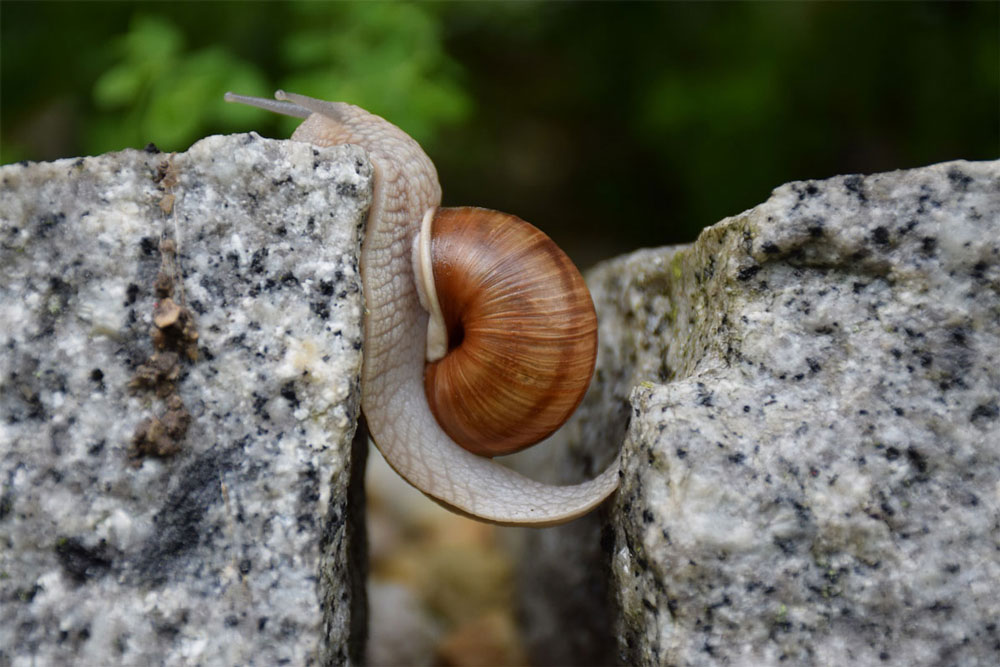
Failures and frustrations are an essential part of any successful musical journey, but so are explosive leaps of mastery!
Let’s take a closer look at what you can expect on your successful journey…
Expect to make mistakes… LOTS of mistakes.
Nobody’s perfect, no matter now good they are… and neither are you or me. Imperfection will always be an integral part of the learning process.
Expect to have off days.
You will have days when it seems that you have gone backwards. Everybody has them. Your body won’t do what you want it to do. You can’t concentrate. You are preoccupied with other things. Your timing is off. You feel tired. You are in a low mood. These aren’t “bad” days… just “off” days. It’s OK to give the piano a rest, OK to do something else you care about, OK to just take a break and relax.
Expect to make massive breakthroughs.
If you study-practice the right way, do not expect to make slow progress over many years of toil. If you study-practice the right way, you will make monumental breakthroughs in a heartbeat… quantum leaps in knowledge, insight, and skill… often when you least expect it… that will take your playing to the next level!
Expect to go through many cycles of despair and self-doubt.
Self-awareness, the essential first step in the self-improvement process, is about exposing weaknesses, bad habits, and blind spots. This blossoming self-awareness is a very vulnerable time for two reasons:
- You have to admit your imperfections and weaknesses. You have to admit that you have imperfections and weaknesses.
- Learning exposes you to higher standards than you had before. Rising standards increase the gap between your present state and your potential.
These realizations can be very humbling indeed and may be accompanied by the feeling that you just don’t “have what it takes”. But don’t despair. Every great accomplisher must go through these trials of self-doubt again and again.
“Unsuccessful people only see your successes.
They don’t see your failures, frustrations, and self-doubt.
They don’t see the perseverance, courage, and love it took to get there.”
– Frank Peter
The real test of “having what it takes” is to keep trying when things seem impossible. This is where success is not about talent. It’s about HEART. It’s about GUTS. So, don’t give up, ever, and you will be richly rewarded with a deep satisfaction that most people never experience.
“I’m not telling you it’s going to be easy.
I’m telling you it’s going to be worth it.”
– Art Williams
Expect your perspectives about music to change.
When you study-practice the right way, your standards of performance continue to rise higher and higher. As you grow in knowledge and skill, a curious thing happens: The distinctions between “easy” and “hard” seem to become arbitrary and pointless.
- Pieces that you thought were “hard” now seem “easier” than you imagined.
- Pieces that you thought were “easy” now seem “harder” than you imagined.
Why? Because you are going to be solving the same basic problems over and over and over again. As your knowledge and skills expand, you will realize that you never really learned the “easy” pieces in the first place. You also will realize that you do not need “more” technique for the harder pieces.
back to… Table of Contents
The 80-20 Principle

The 80-20 Principle is an observation that, in human endeavors, the majority of effects come from a minority of causes and vice versa…
In other words, only a small percentage of our time and energy is very productive, while most of our time and energy is wasted doing things that have little effect or value. In fact, some of our biggest investments of time and energy are not just useless, but destructive.

By the way, there is nothing magical about the numbers 80% and 20%. Some activities can be 90%-10% or even 99%-1%!
Applied to studying and practicing the piano, The 80-20 Principle invites us to discover how to learn the most with the least effort.
Implications of the 80-20 Principle
If you want to become the best musician you can be, you must…
- Focus on the minority of efforts that produce the majority of fruit.
- Stop wasting time doing things that do not prepare you for performance.
- Align all of your study habits with the end–your personal musical goals–in mind.
- Stop wasting time practicing musical patterns that are not relevant to the music that you want to play.
- Start investing your precious time and energy mastering musical patterns that are relevant to the music that YOU want to play.
Every lesson in Piano-ology is designed with the 80-20 principle in mind–showing you exactly what, why, and how to study-practice in order to make the most of your precious time and energy and turn learning into a joyous, self-sustaining process filled with monumental breakthroughs!
back to… Table of Contents
A Meditation on Gratitude

I can’t think of a more honest and inspiring way to begin a study-practice session than with a meditation on GRATITUDE!
A Meditation on Gratitude (Downloadable MP3)
A Meditation on Gratitude Transcript
- Go to the piano… and sit as you normally would.
- Close your eyes… and take three deep breathes… all the way into your belly… slowly in through your nose… and slowly out through your pursed lips.
- With your eyes still closed… reach out with your hands and touch the keys… and realize what a privilege it is to have access to the remarkable instrument in front of you.
- With your eyes still closed… think about the music you love to play… and realize what a privilege it is to have access to such a rich inheritance.
- With your eyes still closed… realize what a privilege it is to have the time and freedom to make music part of your life.
- With your eyes still closed… realize what a privilege it is to have two working arms… and two working hands… and ten working fingers.
- Realize what a privilege it is to have… two good ears to hear… and two good eyes to see.
- With your eyes still closed, realize what a privilege it is to have the opportunity to share your love of music with others!
- Finally, drop your shoulders and breathe deeply… feel your whole body relax… and allow an easy smile to come to your face.
- Now we are ready to begin our work.
Let’s aspire to make gratitude a routine practice every time we sit down to study, practice, and perform… until it becomes so automatic that it permeates who we are as human beings.
back to… Table of Contents
Practice Habits: Micro-Lessons

A rich collection of short & sweet insights for cultivating highly productive study and Practice Habits!
And a reminder that high levels of accomplishment are not the result of “talent” but are the inevitable fruit of studying and practicing the right things the right way. Here are some healthy mindsets and attitude adjustments to get your practice habits moving in the right direction. Let’s go!
Please let Frank know if you’d like to get these micro-lessons as a PDF or set of MP3s.
If you want to get good,
you have to do more than just play…
You have to STUDY & PRACTICE.
The quality of your performance
is absolutely determined by
the quality of your study and practice habits.
When you practice the wrong things
the wrong way,
learning is slow & insecure.
When you study and practice the right things
the right way,
learning is fast & enduring.
The reason you make mistakes
and seem to forget the music
is that you never really learned the music
properly in the first place.
QUALITY first… Quantity second.
In other words, Study first… Practice second.
NEVER, EVER practice something
faster than you can hear it, think about it,
see it, and execute it accurately.
Exercising makes your muscles tired…
Studying makes your brain tired.
If you want to get good,
you don’t need to exercise…
You need to study!
Five minutes of
mindful attention
beats five hours
of mindless repetition.
The best way to remember something
is to make it memorable!
Music that is merely “memorized”
is at risk of being forgotten.
Music that is understood
is never forgotten.
Once your brain
recognizes a musical pattern,
it doesn’t have to “try” to remember it.
It automatically becomes
a permanent part of your musical mind.
You learn what you practice, exactly,
for better or worse, mistakes and all.
A mistake is like a good friend
telling you that
you still have something to learn.
Every mistake is a mental,
not a physical, error.
Practice makes permanent…
so stop “practicing” your mistakes!
If, at first, you don’t succeed…
please do try again…
but try again in a different way.
Mindless Practice = Sloppy Performance
Mindful Practice = Crisp Performance!
Stop wasting precious time doing things
that do not help you perform better!
Stop wasting precious time “practicing” stuff
that you already know how to play!
Record everything,
listen to the playback immediately,
and ask yourself:
Is THAT what you intended to play?
You know you know the music
when you can imagine playing it
with your ears, intellect, eyes, and muscles!
Doing a little bit every day
beats doing a lotta bit once a week.
You don’t want to merely play symbols…
You want to play the sounds
you are hearing in your mind’s ear.
Mastery is largely about discovering SIMPLICITY
in apparent complexity.
Once you see the simplicity, you realize
that complexity is just an illusion.
One reason to play music
is to discover your limits…
so that you can transcend them…
and realize that they weren’t limits after all.
back to… Table of Contents
Discover more from PIANO-OLOGY
Subscribe to get the latest posts sent to your email.