Major Scale: Non-Linear View: Two musically important ways that a scale is so much more a line of notes that goes up and down in steps.
Table of Contents
Lesson Goal
To think about, read, hear, and feel the major scale in two ways: 1) sequence of dissonance with respect to the key center Do, and 2) tension notes and their resolutions to the primary chord tones in the tonic I chord… in all keys.
Prerequisites
Basic music reading… LOVE of music… and the discipline to study and practice.
Major Scale: Non-Linear View, All Keys
The Major Scale is so much more than a string of equally important notes that go up and down in “half steps” and “whole steps”.
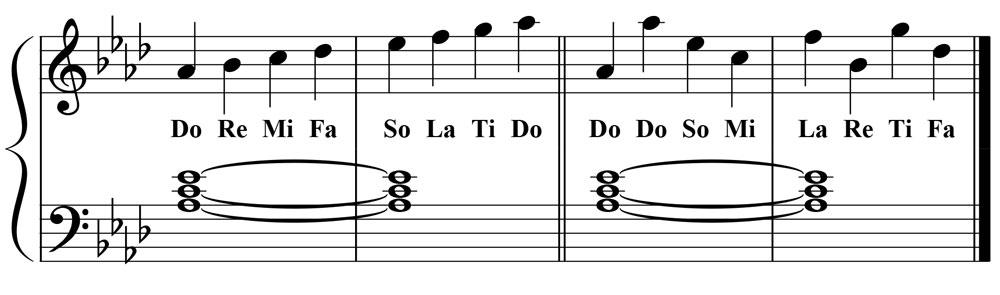
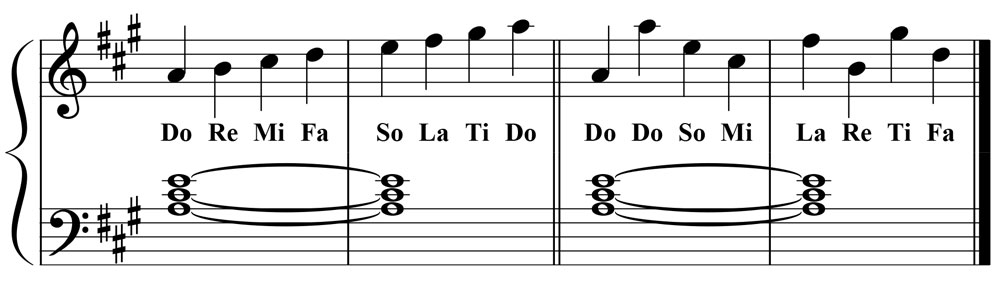
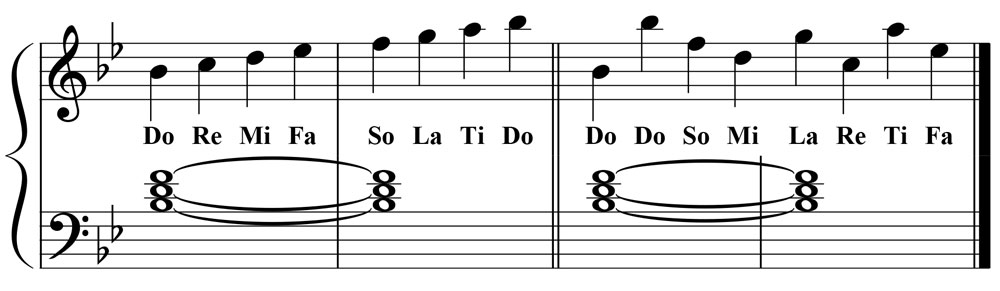
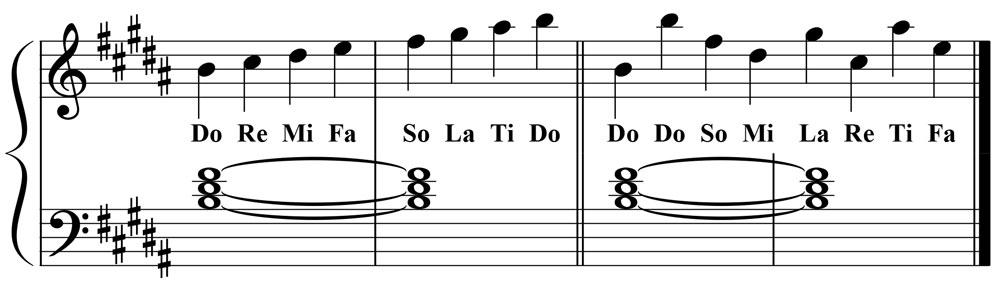
Here, for your consideration, is an alternative non-linear way to think about, hear, visualize, and play the major scale: where the notes of the scale are rearranged in order of consonance and stability with respect to the major tonic chord in each key.
Ear Training Tip: This isn’t about learning to hear intervals. As you read and play it’s about how each note (Solfege Syllable) sounds and feels with respect to the major triad that defines the key center (Do) and major tonality.
Here are all twelve major scales… first played linearly ascending, then with notes rearranged (loosely) in order of stability and consonance.
C Major Non-Linear View
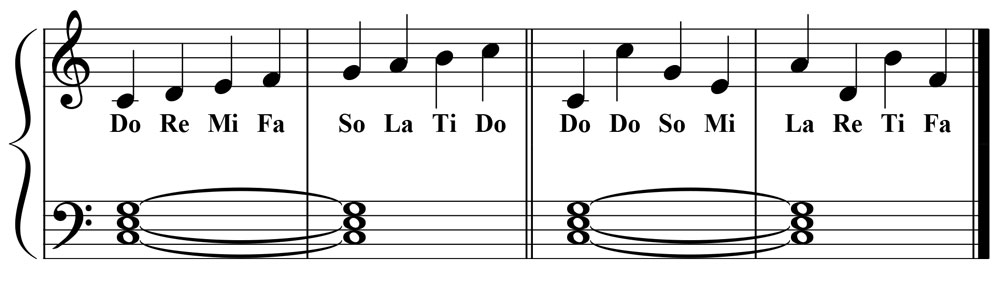
Notice that bar 3 includes the primary chord tones (Do, Mi, So) in the major triad, 2) bar 4 includes all the tension tones (La, Re, Ti, Fa) with respect to the I chord, 3) the last two notes (Ti, Fa) are the tritone that defines dominant harmony.
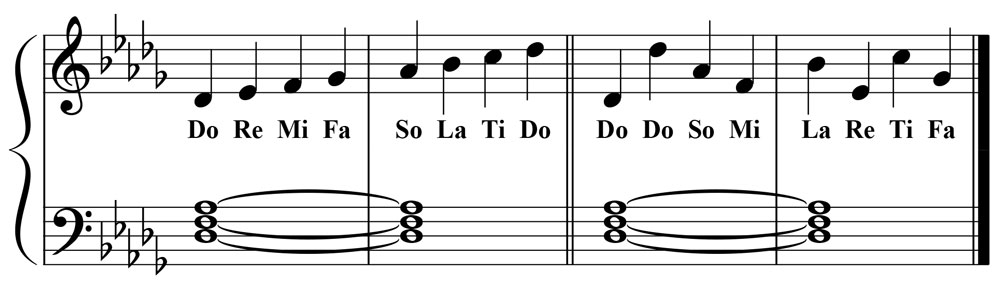
D Flat Major Non-Linear View
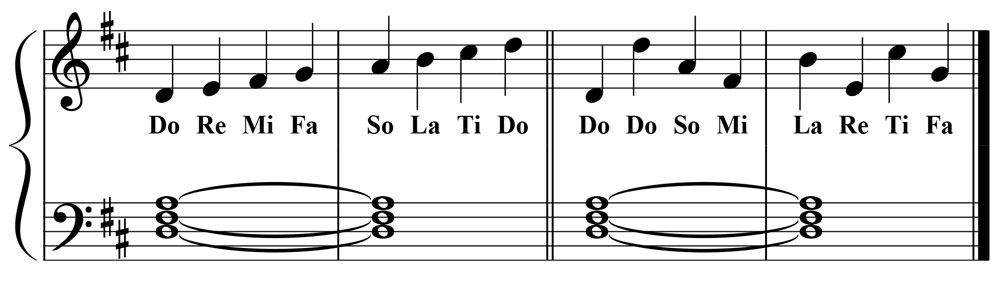
D Major Non-Linear View
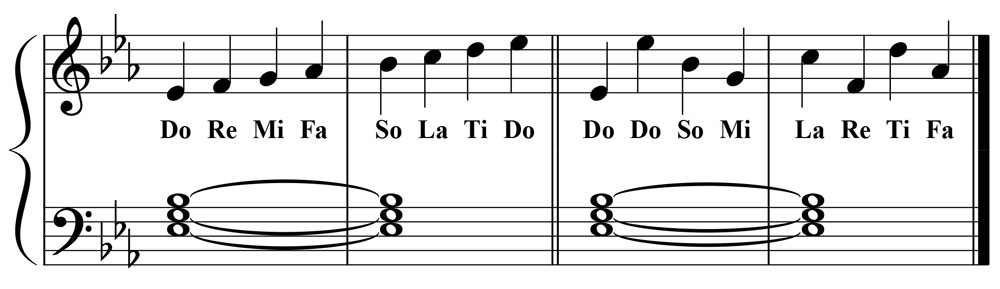
E Flat Major Non-Linear View
E Major Non-Linear View
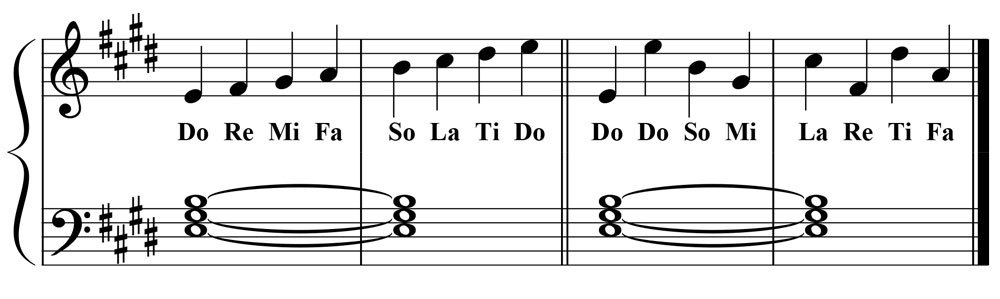
F Major Non-Linear View
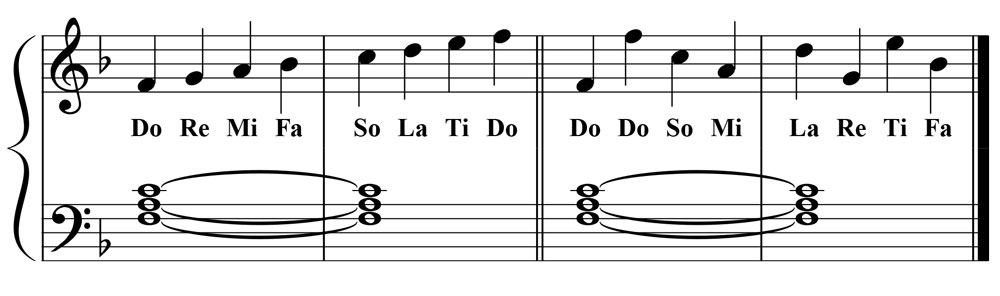
G Flat Major Non-Linear View
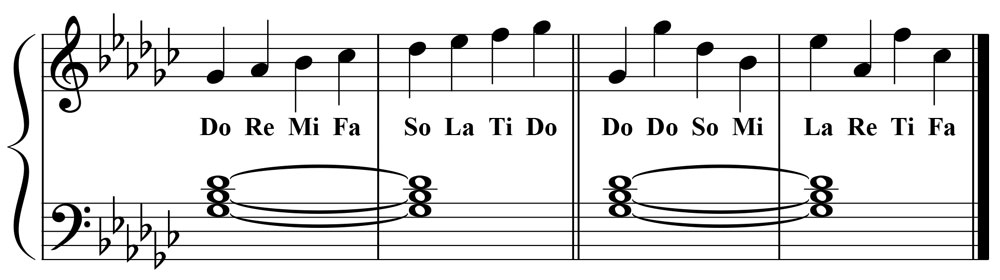
G Major Non-Linear View
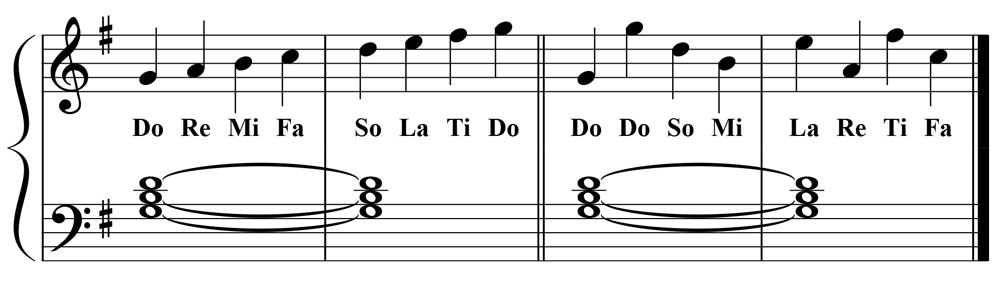
A Flat Major Non-Linear View
A Major Non-Linear View
B Flat Major Non-Linear View
B Major Non-Linear View
back to… Table of Contents
Major Scale: Primary Resolutions, All Keys
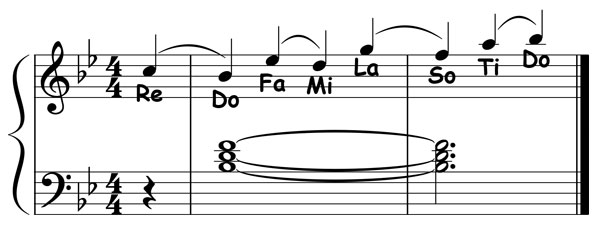
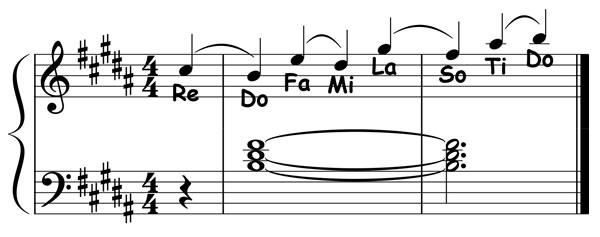
Let take what we learned above to the next level by playing the “primary resolutions” from each tension note. Notice that they come in pairs where each tension note falls on a weak beat and resolves to a tonic chord tone (Do, Mi, So) on a strong beat. THIS relationships of harmonic tension and release and its placement with the meter is fundamental to how melodies work.
Ear Training Tip: This isn’t about learning to hear intervals. As you read and play it’s about the unique sound-feeling of tension tone (Re, Fa, La, Ti) and the unique sound-feeling of the primary chord tone (Do, Mi, So) when the resolution arrives. It’s critically important to sing the Solfege syllables out loud… in time… and slowly enough to allow the sound-feeling of each resolution make a meaningful impact on you mind’s ear.
C Major Resolutions
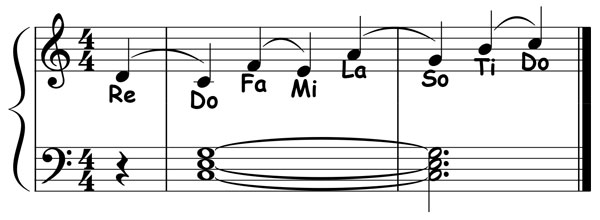
Db Major Resolutions
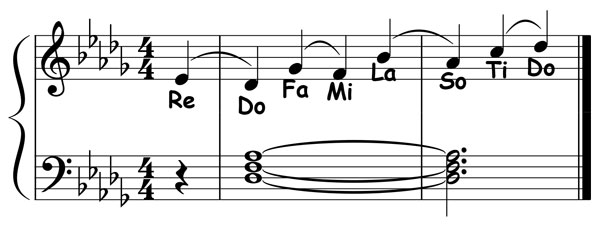
D Major Resolutions
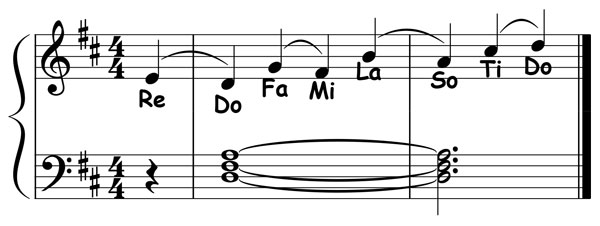
E Flat Major Resolutions

E Major Resolutions
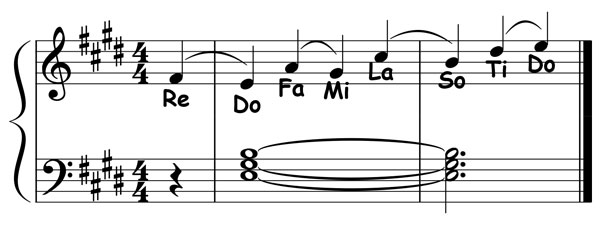
F Major Resolutions
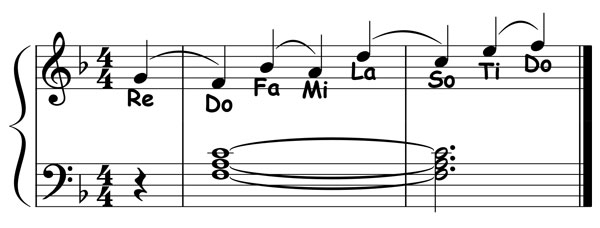
G Flat Major Resolutions

G Major Resolutions

A Flat Major Resolutions

A Major Resolutions

B Flat Major Resolutions
B Major Resolutions
back to… Table of Contents
Scales, Non-Linear View YouTube
back to… Table of Contents
learn more… Scales