Lesson Goal: To understanding what Muscle Memory is, how it relates to Automatization, and why it’s an essential aspect of fluent musical piano technique…
Table of Contents
Prerequisites
None.
back to… Table of Contents
What is Muscle Memory?
Muscle memory (a long-term procedural memory) is the ability to move your body in a particular way without thinking about it.
It is through this mysterious process that we learned how to walk, speak, tie our shoes, and ride a bicycle–and how we can still do so without trying to remember how.
back to… Table of Contents
Is Muscle Memory Mental or Physical?
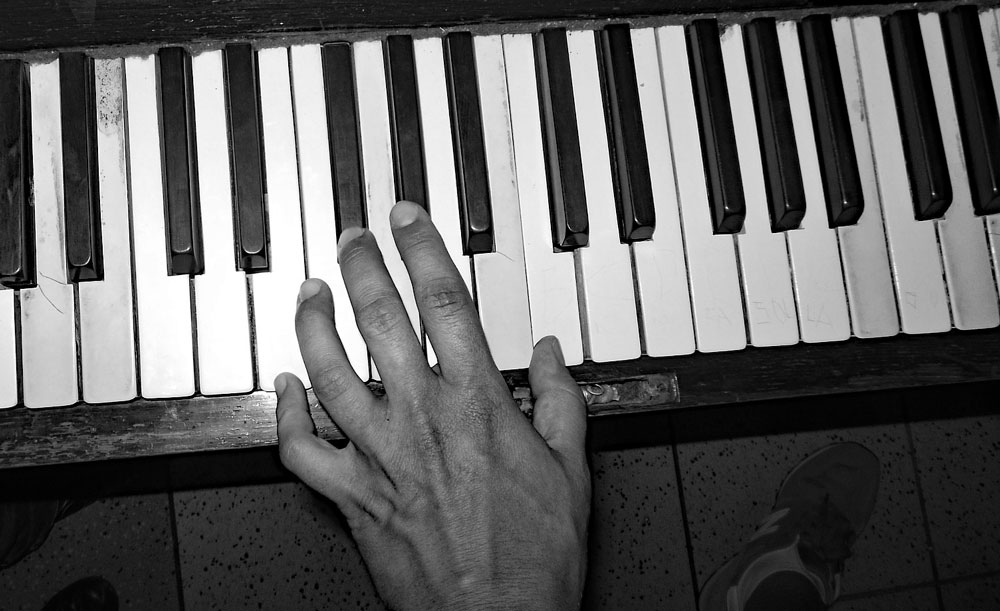
Although practice may incidentally build muscle mass, strength, and quickness… a muscle memory is stored in your brain, not in your muscles. Your muscles do the moving, but the fine motor skill is learned by and controlled by a procedural memory in the neural network in the motor cortex of your brain.
back to… Table of Contents
How are Muscle Memories Created?
Muscle memories are created by the following process…
- Every time we consciously repeat a motor activity (also known as practicing), a procedural memory trace is created.
- If a particular movement is repeated, a long-term, sub-conscious memory is created for that movement.
- If repeated enough times, that particular movement will eventually be performed without conscious effort.
This process, called automatization, makes complex motor tasks easy and eliminates the need for conscious attention, thus freeing our brains to attend to other important things such as the artistic elements of our performance.
back to… Table of Contents
How Long Does it Take to Create a Muscle Memory?
The amount of time required to create a reliable, automatic, and permanent procedural memory depends on at least five important factors:
- The complexity of the task.
- Prior experience and knowledge.
- How many times you practice.
- How often you practice.
- The quality of your practice.
Be Patient. Fine motor skills are an amazing feat of coordination and timing of multiple muscles and joints. Such skill cannot typically be learned in one lesson. Some may only take minutes. Others may take months of experimentation. It may not always be easy, but it will always be worth it!
back to… Table of Contents
Implications for Practicing Music
Understanding what muscle memories are and how they are formed is absolutely essential for cultivating effective and efficient piano practice habits. To that end, here are some key insights to keep in mind:
- If you study and practice the right way your muscle memories will be automatic, reliable, and permanent.
- Your musical conception (notes, rhythm, articulation, phrasing) must be crisp and clear. Fuzzy conception will lead to fuzzy, unstable muscle memory.
- Reliable muscle memories require you to understand the principles of sound piano technique and how they apply to the choreography of the particular piece of music.
- Mindless mechanical practice is worse than no practice at all. Failure to be crisp and consistent will store a tangle of unstable, competing memories that are a recipe for disaster.
- Quality first; Quantity second. Consistently playing the correct notes using an easy fingering, with good rhythm, and musical choreography makes a crisp, clear, unambiguous impression on your muscle memory circuits.
- No detail is too small. Any inconsistency or insecurity in your execution will become part of the muscelo memory.
back to… Table of Contents
A Warning about the Automatization Process
The automatization process is completely unconscious and non-selective. It will create muscle memories for every movement we repeat–even when these motions are awkward and inconsistent. In other words, if we practice motions that are awkward and inconsistent, we will develop muscle memories that are awkward and inconsistent.
back to… Table of Contents
How Muscle Memory Relates to “Musical Mind“
Learning to play like a musician requires you to store and connect two things in memory:
- Your musical intention (The sound of the music you intend to play).
- The sensory-motor trace that executes that musical intent.
During performance, the music leads and the physical execution follows. As you “play” the music in your mind’s ear, it will instantaneously and effortlessly trigger the sensory-motor response that you so diligently practiced.
back to… Table of Contents
learn more… Piano Technique
Discover more from PIANO-OLOGY
Subscribe to get the latest posts sent to your email.