Lesson Goal: To quickly internalize the Mixolydian Scale in all keys… by ear, intellect, eye, and muscle…
Table of Contents
Prerequisites
Basic music reading skills… the LOVE of music… and the discipline to study and practice.
back to… Table of Contents
Why Learn the Mixolydian Scale?
Because it’s widely used in a variety of musics around the world: classical, folk, blues, pop, rock, country, and modal jazz.
back to… Table of Contents
Mixolydian Mode Wiki
learn more… Mixolydian Mode (Wikipedia)
Mixolydian Scale Theory
- Scale Structure (Solfege): Do-Re-Mi-Fa-So-La-Te-Do.
- Scale Structure (Scale Degrees): 1-2-3-4-5-6-b7-1.
Important: Do not confuse this with the fifth mode of the major scale!
Theory in the Key of C
The C Mixolydian Scale shares the same notes as the C Major Scale with one exception: Bb/b7/Te instead of B/7/Ti…
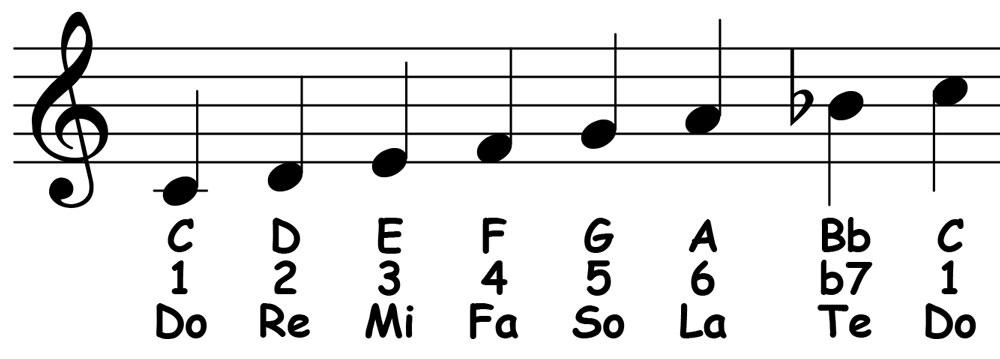
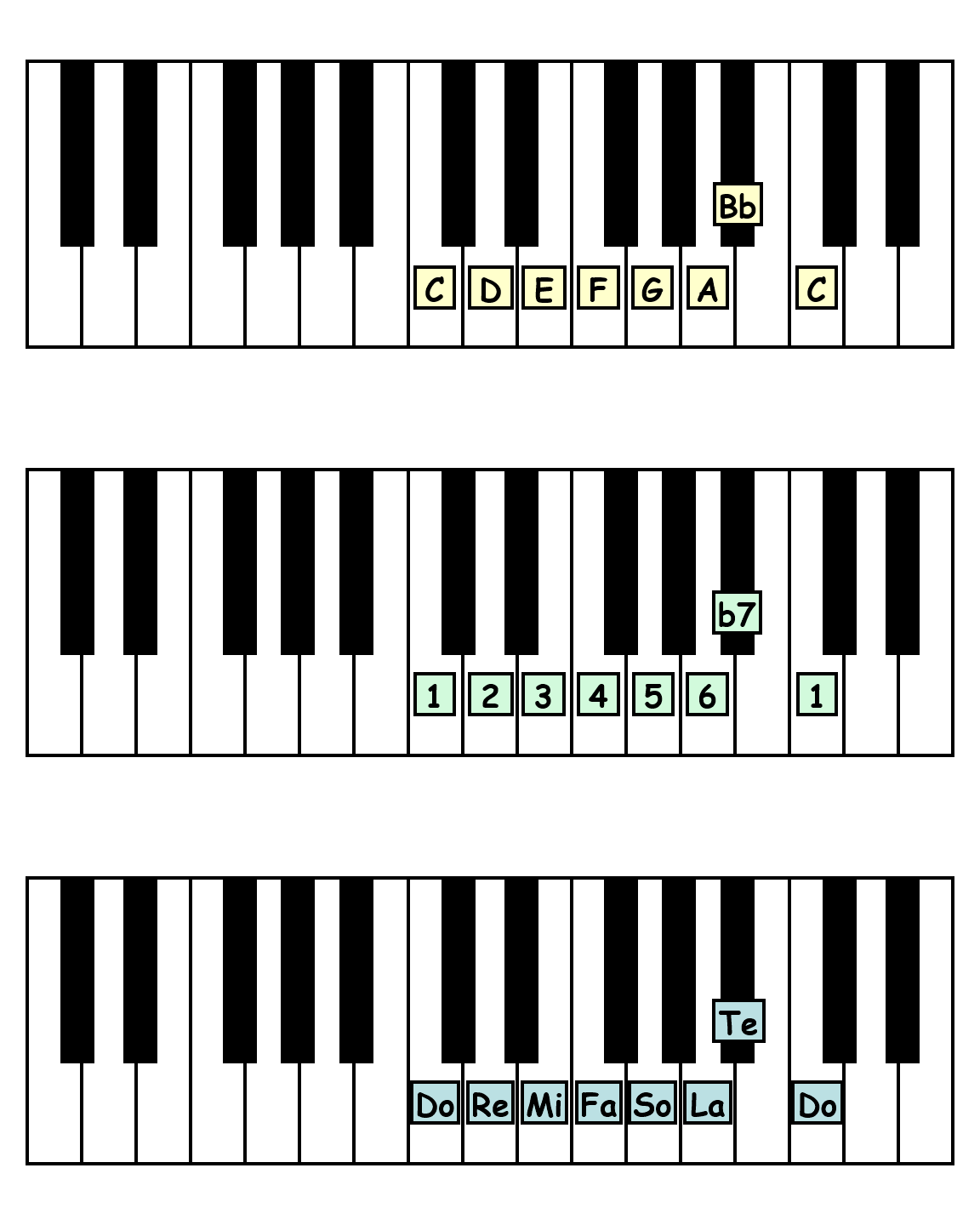
back to… Table of Contents
C Mixolydian Compared to the C Major Scale
Important: Notice that the C Mixolydian shares the same notes as the C Major Scale with one exception: Bb/b7/Te instead of B/7/Ti. Don’t try to “memorize” this fact, but do realize how much certain scale types have in common, how learning one kind of scale helps you to learn others, and how the addition or subtraction of even just one note can profoundly change the character of a scale… and allows you to create a whole new kind of music!
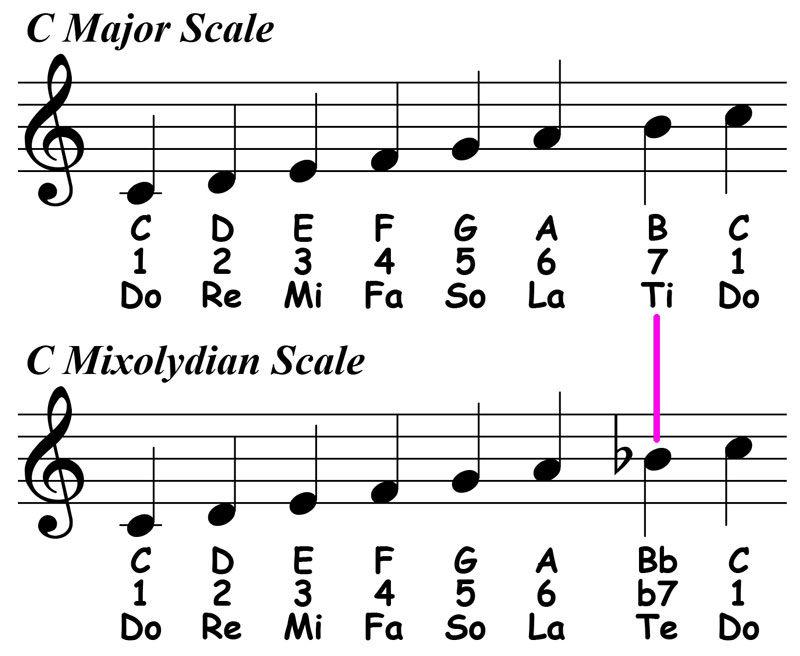
Play and sing the C Mixolydian and C Major scales “side by side”, slowly enough to hear and feel the distinct difference between Ti and Te, paying special attention to the unique melodic-harmonic attraction that each note has with respect to Do.
Play and listen to the C Major Scale…
Play and listen to C Mixolydian…
Notice that Ti gives the Major Scale a more classical flavor, while Te gives the Mixolydian Scale a more primitive flavor. And so, it’s appropriate to think of the C Mixolydian as the modal version of the C Major Scale.
back to… Table of Contents
Solfege Ear Training
Reading, playing, and singing the Solfege Syllables out loud is an extremely effective way to tune up your ears and to internalize the unique sound-feeling of each note in the scale with respect to the key center Do. Make sure to do this slowly enough for the unique sound-feeling of each Solfege Syllable to make a meaningful impression on your mind’s ear.
C Mixolydian: Linear, Ascending…

C Mixolydian: Linear, Descending…

C Mixolydian: Do-X-Do, Ascending…

C Mixolydian: Do-X-Do, Descending…

Note: We could sing lots more musical patterns, but a more effective and efficient approach (the 80-20 Principle) is to get your ear training material directly from the music that YOU want to play!
back to… Table of Contents
Theory & ear Training, All Keys
Showing the notation, key signature, letter names, scale degrees, solfege syllables, and keyboard layouts in 12 keys…arranged chromatically ascending (C, Db, D, Eb, E, F, F#, G, Ab, A, Bb, B)…
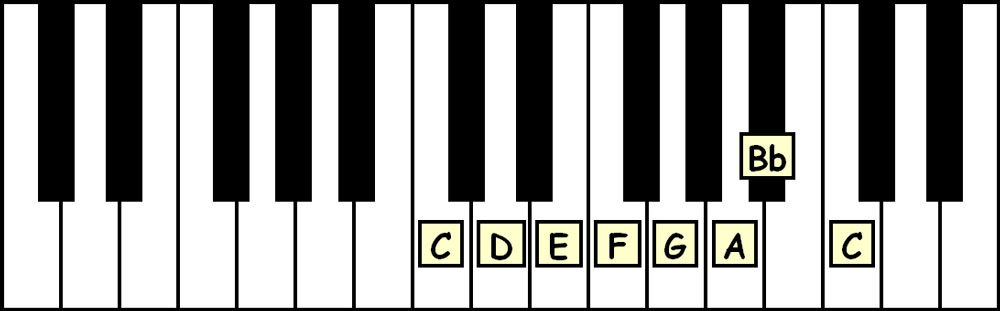
C Mixolydian
Say this aloud as you read and play: “The C Mixolydian Scale is spelled C-D-E-F-G-A-Bb-C.” (Also sing the solfege syllables out loud with special attention to the note Te… ditto for all the keys below)
Sidebar: The goal here is learn how to read and where they are on the keyboard. Don’t worry about fingerings right now. In fact, it’s perfectly fine and maybe even preferrable to play these with one finger for now so that you don’t instill poor technical habits.

Db Mixolydian
Say this aloud as you read and play: “The Db Mixolydian Scale is spelled Db-Eb-F-Gb-Ab-Bb-Cb-Db.”


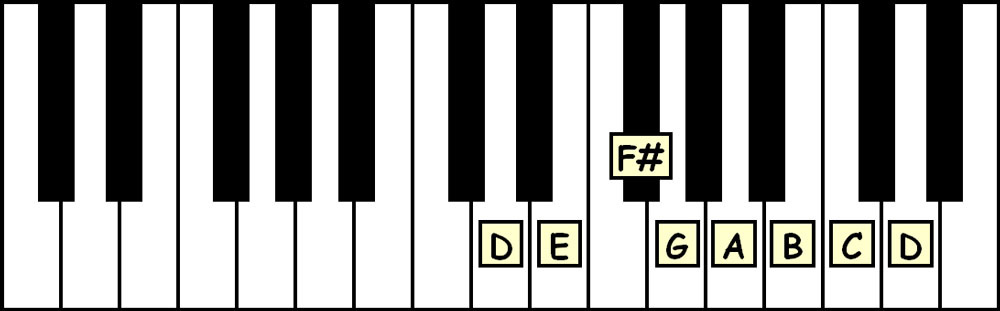
D Mixolydian
Say this aloud as you read and play: “The D Mixolydian Scale is spelled D-E-F#-G-A-B-C-D.”

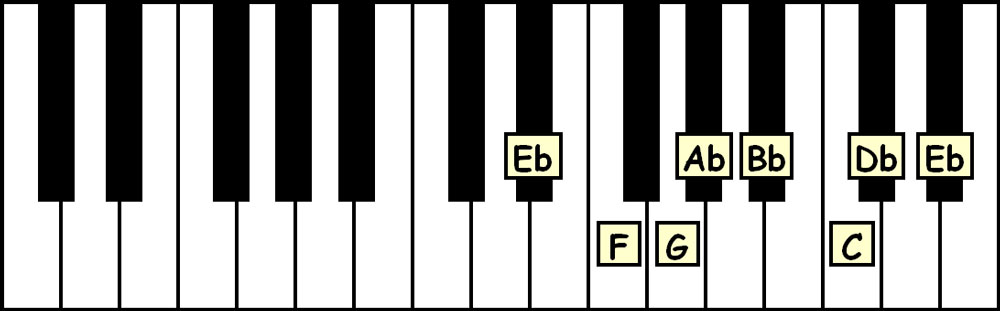
Eb Mixolydian
Say this aloud as you read and play: “The Eb Mixolydian Scale is spelled Eb-F-G-Ab-Bb-C-Db-Eb.”

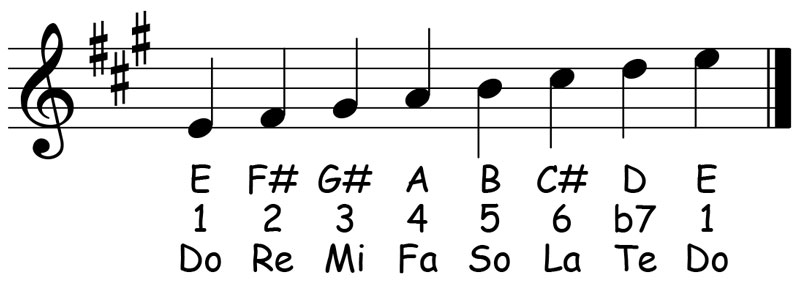
E Mixolydian
Say this aloud as you read and play: “The E Mixolydian Scale is spelled E-F#-G#-A-B-C#-D-E.”

F Mixolydian
Say this aloud as you read and play: “The F Mixolydian Scale is spelled F-G-A-Bb-C-D-Eb-F.”


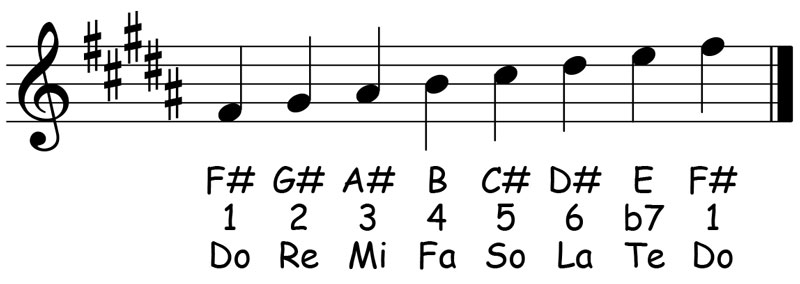
F# Mixolydian
Say this aloud as you read and play: “The F# Mixolydian Scale is spelled F#-G#-A#-B-C#-D#-E-F#.”

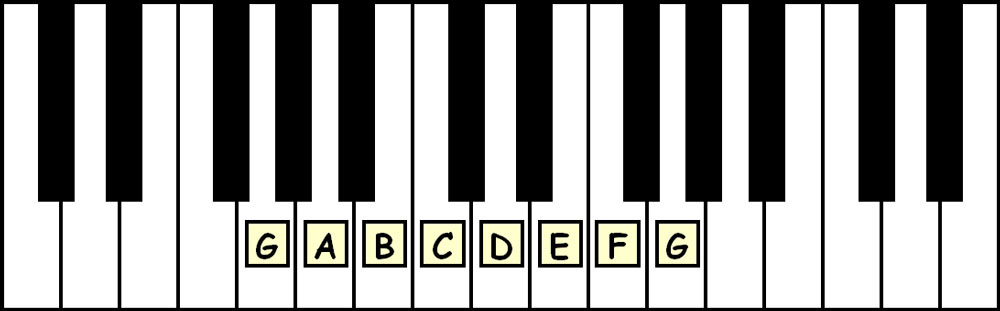
G Mixolydian
Say this aloud as you read and play: “The G Mixolydian Scale is spelled G-A-B-C-D-E-F-G.”

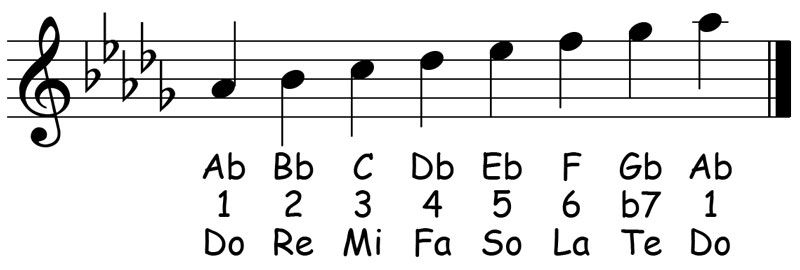
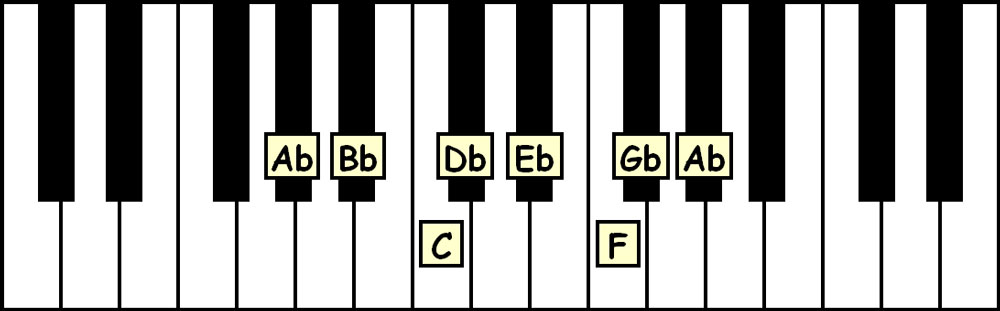
Ab Mixolydian
Say this aloud as you read and play: “The Ab Mixolydian Scale is spelled Ab-Bb-C-Db-Eb-F-Gb-Ab.”
A Mixolydian
Say this aloud as you read and play: “The A Mixolydian Scale is spelled A-B-C#-D-E-F#-G-A.”


Bb Mixolydian
Say this aloud as you read and play: “The Bb Mixolydian Scale is spelled Bb-C-D-Eb-F-G-Ab-Bb.”


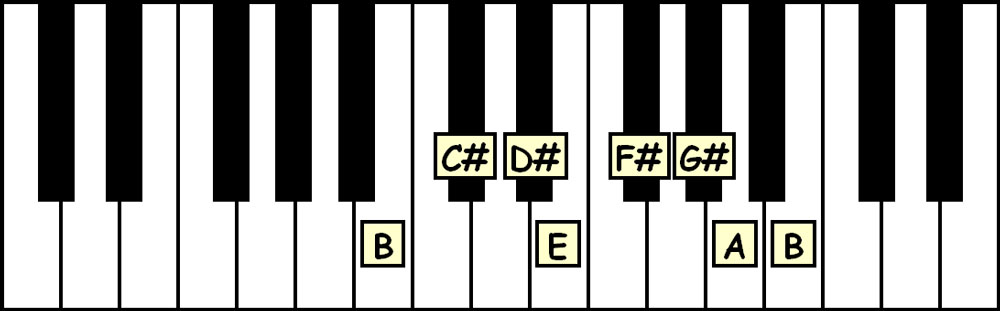
B Mixolydian
Say this aloud as you read and play: “The B Mixolydian Scale is spelled B-C#-D#-E-F#-G#-A-B.”

back to… Table of Contents
learn more… Scales
Discover more from PIANO-OLOGY
Subscribe to get the latest posts sent to your email.