Piano Accompaniment for “Happy Birthday”, a special occasion favorite that every piano player should have in their bag…
Table of Contents
Lesson Goal
To internalize some bread and butter piano accompaniment ideas for the “Happy Birthday” song… so that you can confidently accompany yourself or lead a group singing when the opportunity arises.
Prerequisites
Basic music reading skills… basic scale, chord, and chord progression theory… basic piano technique… the LOVE of music… and the discipline to study and practice.
What’s a Good Key for Singing Happy Birthday?
You will see “Happy Birthday” written out in a variety of keys, but to my ears and experience, the most comfortable key for all voices is F, so that’s what we’re going to run with here.
Sidebar: Too often, “Happy Birthday” is a total train wreck for two reasons: (1) People start singing in different keys and fight each other the whole way and (2) Even if they are in the same key, the key is either too high or too low to be comfortable for all voices. But have no fear! Because YOU the piano player are here to save the day!
back to… Table of Contents
“Happy Birthday” Chords & Lyrics
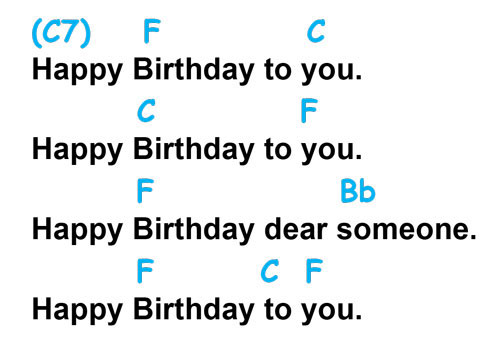
Download in easy-to-read PDF format specially designed for both vocalists and accompanists…
back to… Table of Contents
“Happy Birthday” Lead Sheet
Here’s the simplest notation for the melody and harmony in the key of F…
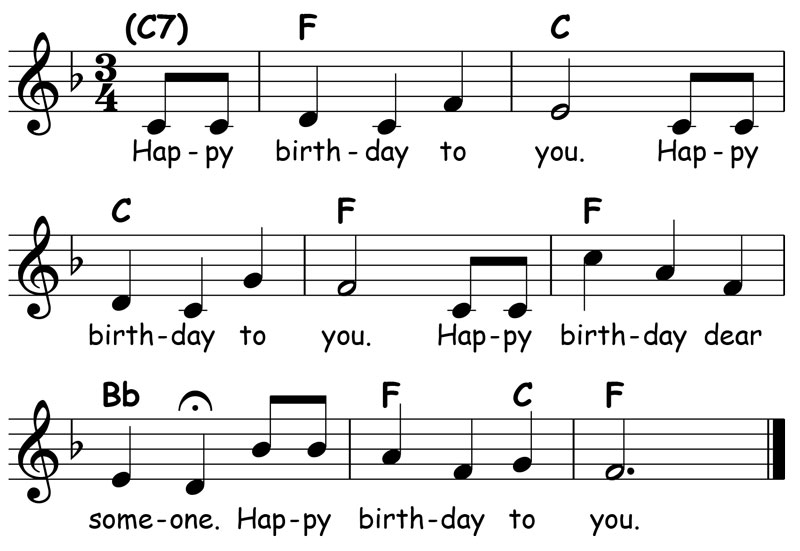
While it’s not typical to play the melody when accompanying a vocalist, sometimes doing so is appropriate. In the case of “Happy Birthday”, it may help to keep all the untrained singers (like Frank) in tune. Listen to Frank demonstrate one way to interpret the lead sheet…
A Special Note about the Meter and Rhythm
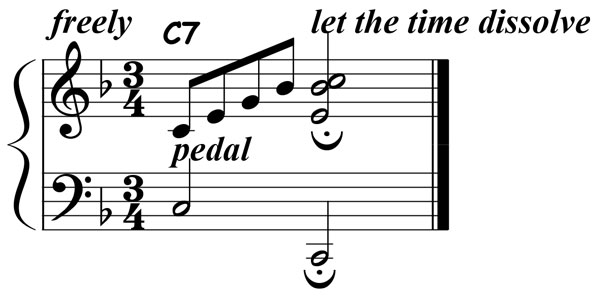
Don’t try to play this in strict time. Allow things to flow organically by “swinging” the eighth notes a bit, allowing each phrase to breath with the words, letting the time dissolve on the held note, and capping things off with a slight ritard. All this gives this gem a nice lilt that sounds and feels natural. Of course, you have to be flexible and read the room. Done right, a kind of rhythmic resonance occurs where everyone present… including all the singers and the piano player… simply feel the tempo, phrasing, and vibe without anyone trying to or having to force anything to happen.
back to… Table of Contents
“Happy Birthday” Melody (for Playing Along)
In middle register octaves as would typically be sung by a group of untrained singers, for you to practice accompanying them!
Special Note: Frank intentionally recorded this a bit “loose”… because this is representative of a typical rendition at a birthday party attended by real humans… untrained vocalist who have never before sung together before.
“Happy Birthday” Basic Chord Accompaniment
Here’s a simple accompaniment: Roots played in the bass and block chords played in the right hand on all the important beats, connecting them using voice leading as follows…

Listen to Frank demonstrate one way to play this with the melody track…
Play this as you accompany the melody track above or your own voice… with special attention to two things:
- Are there any places where the melody notes and chords feel like they are fighting each other a little? (more on this in the next section).
- Do your feel the sense of anticipation created by the “Hap-py” eight notes and how they project when the following big downbeat is going to occur? (The place in the meter where the chords are played)
Practice Habits Reminder: Record yourself, listen to the playback immediately, and see what you discover!
back to… Table of Contents
“Happy Birthday” Appoggiaturas
Notice that there are three places (circled below) where the melody notes don’t quite match up with the harmony:
- The note D over the F chord in bar 1.
- The note D over the C chord in bar 3.
- The note E over the Bb chord in bar 6.
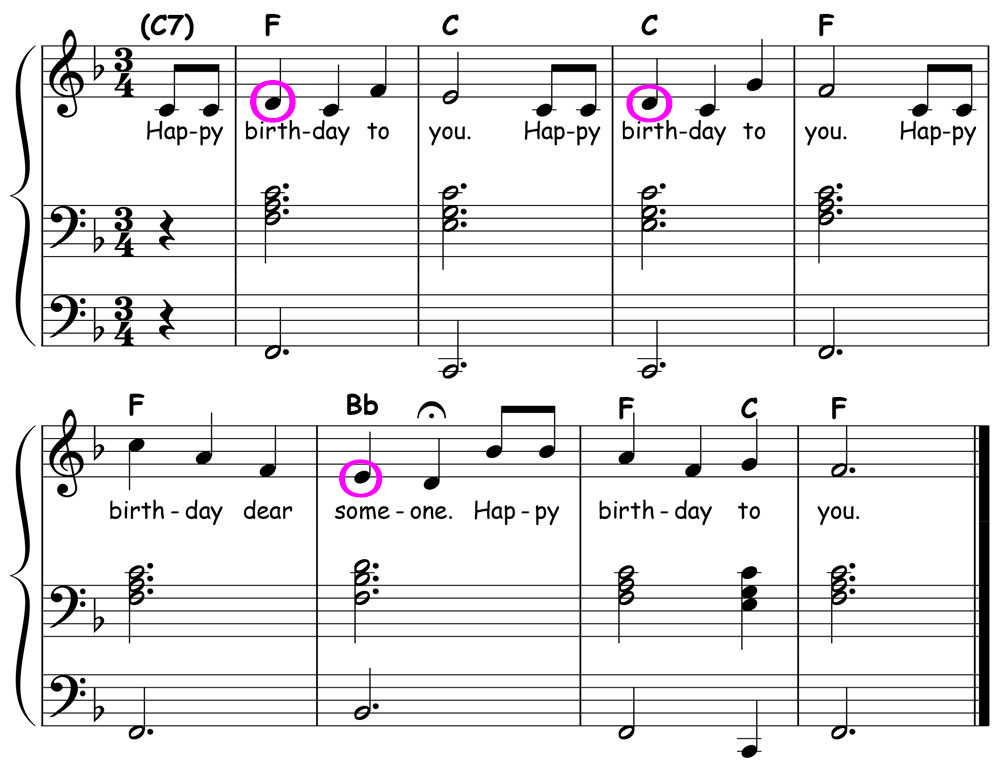
These melody notes are called appoggiaturas. An appoggiatura is non-chord note that is intentionally played on a strong beat, creating a short and interesting melodic-harmonic tension before resolving to a primary chord tone.
Ear Training Tip: play this as you sing along and stop and sustain each appoggiatura in order to get a flavor for how each one and its resolution sounds and feels.
Listen to Frank break down each appoggiatura and it’s resolution…
back to… Table of Contents
Happy Birthday: Appoggiatura “Clashes” Fixed
To my ears, there are two musical reasons to adjust the chord tones in the accompaniment to accommodate the appoggiaturas:
- It reinforces each appoggiatura, helping them do their job of creating a temporary harmony tension.
- It helps keep all of us untrained vocalists singing in tune!
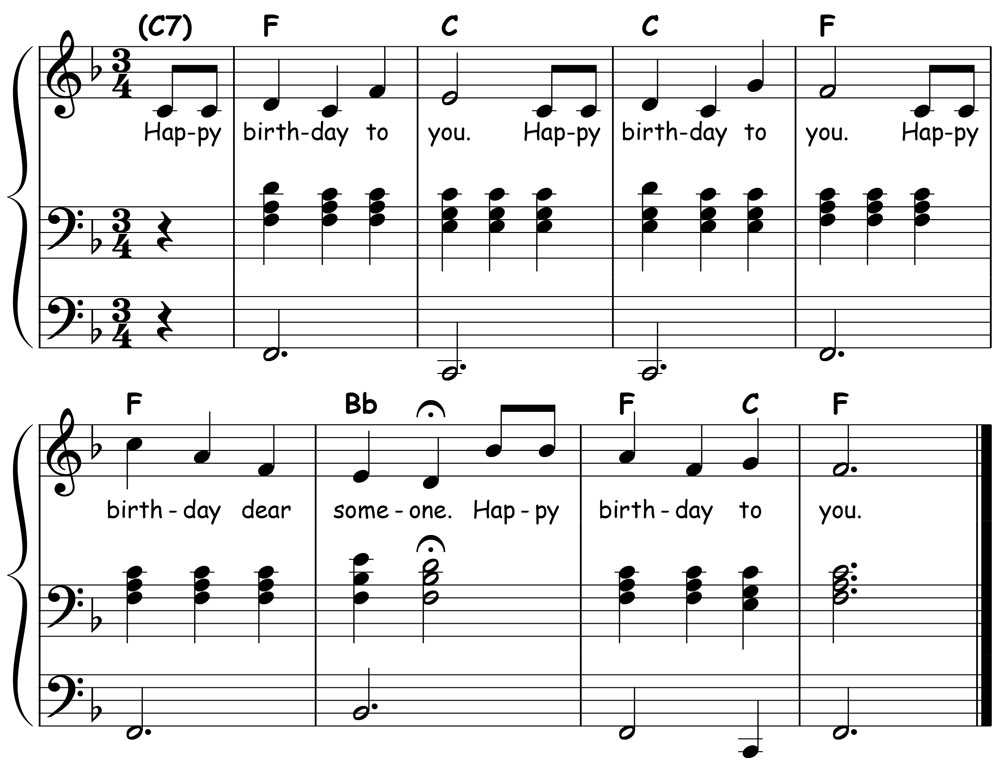
Listen to Frank demonstrate one way to play this with the melody track…
back to… Table of Contents
Happy Birthday Oom-Pah-Pah Accompaniment
A fun way to accompany the song is to play an “Oom-Pah-Pah” accompaniment pattern, where “Oom” is the bass note played on beat 1 and “Pah-Pah” are the chords played in the right hand on beats 2 and 3. This pattern has two important features: (1) It established a very nice waltz rhythm and (2) Because the appoggiaturas all fall on “the 1” when the chords are not played there is no clash between the melody and basic harmony.
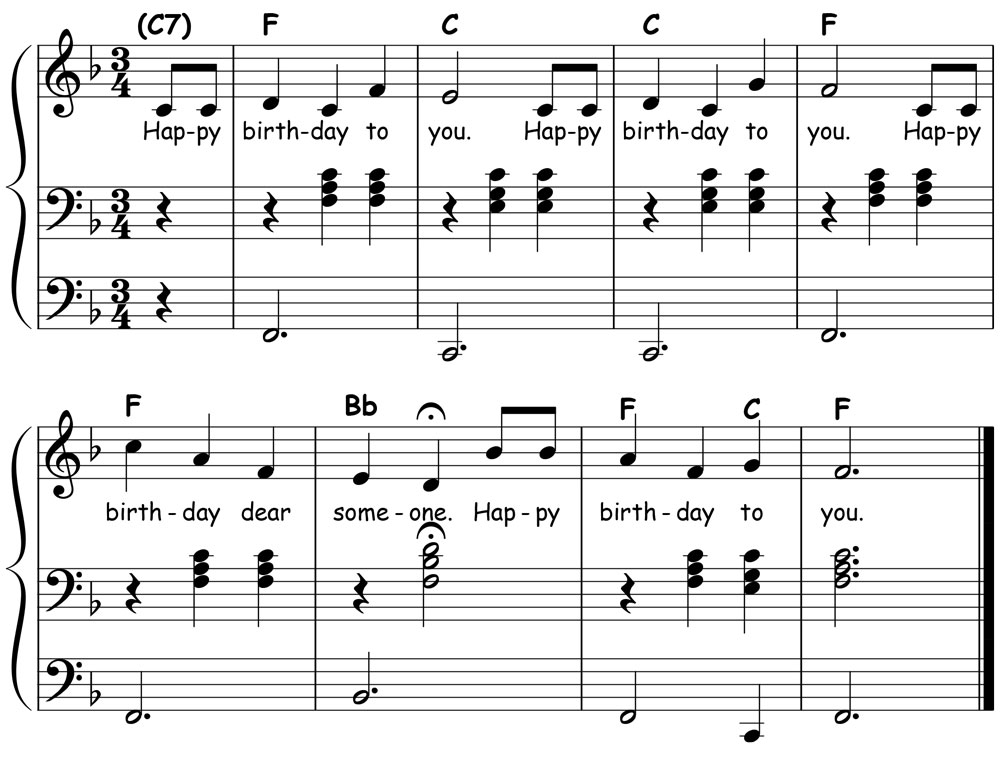
Listen to Frank demonstrate one way to play this with the melody track…
back to… Table of Contents
A Fancier Version
“Happy Birthday” is all about the person you are singing and playing for. You want to contribute to the occasion, not upstage anyone. But you still might want to dress things up a bit. This version incorporates the appoggiaturas as needed, adds a few extra pickup notes in the bass along with some chord inversions that create a simple bass line melody…

Listen to Frank demonstrate one way to play this with the melody track…
back to… Table of Contents
A Simple Introduction
Adding an introduction is a great way to set the tone, both literally and figurately. A simple, but effective idea is to play a C7 chord (the V7 in the key of F) as an ascending arpeggio…
back to… Table of Contents
A Simple Ending
Adding an ending is a great way to cap off any song. A bread and butter idea is to play the final chord ad lib (as you desire). For example, you can play it as an ascending arpeggio that gets slower (ritard) and softer (decrescendo) to suit the flow of the music…

back to… Table of Contents