Learn-by-doing lessons for quickly internalizing the Major Scale in all keys… by ear, intellect, eye, and muscle…
Table of Contents
Lesson Goal
To quickly internalize the letter names, scale degrees, solfege, notation, sound, feeling, and visuospatial keyboard layout for the the Major Scale in all keys.
Prerequisites
Basic music reading skills… the LOVE of music… and the discipline to study and practice.
Why Learn the Major Scale?
Because it’s used used in a wide variety of music all around the world: classical, folk, pop, rock, bluegrass, country, and modal jazz. And because it provides the foundation for building a rich network of scale, chord, and chord progression mastery.
back to… Table of Contents
Major Scale Theory & Ear Training
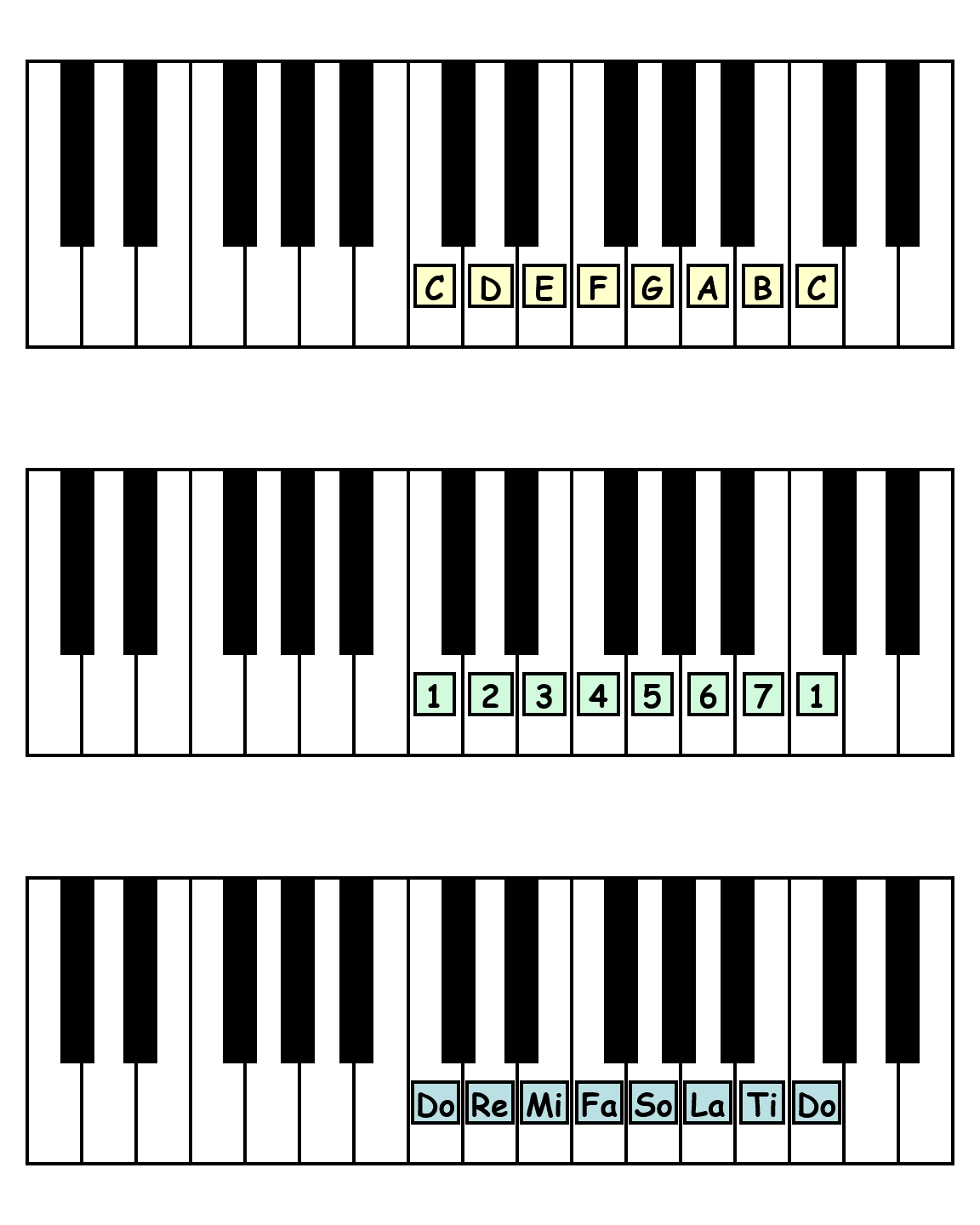
- The Solfege Syllables for the Major Scale are Do-Re-Mi-Fa-So-La-Ti-Do (no matter what key you are in).
- The Scale Degrees for the Major Scale are 1-2-3-4-5-6-7-1 (no matter what key you are in).
- The notes for the Major Scale in the key of C are C-D-E-F-G-A-B-C…

back to… Table of Contents
Major Scale Solfege Ear Training
Reading, playing, and singing the Solfege Syllables out loud is an extremely effective way to tune up your ears and to internalize the unique sound-feeling of each note in the scale with respect to the key center Do. Make sure to do this slowly enough for the unique sound-feeling of each Solfege Syllable to make a meaningful impression on your mind’s ear.
Linear, Ascending…

Listen to Frank model one way you might play and sing this…
Linear, Descending…

Listen to Frank model one way you might play and sing this…
Do-X-Do, Ascending…

Listen to Frank model one way you might play and sing this…
Do-X-Do, Descending…

Listen to Frank model one way you might play and sing this…
We could sing a lot more musical patterns, but a more effective and efficient approach (80:20 Rule) is to get your ear training material directly from the music that YOU want to play!
back to… Table of Contents
Major Scale Theory & Ear Training, All Keys
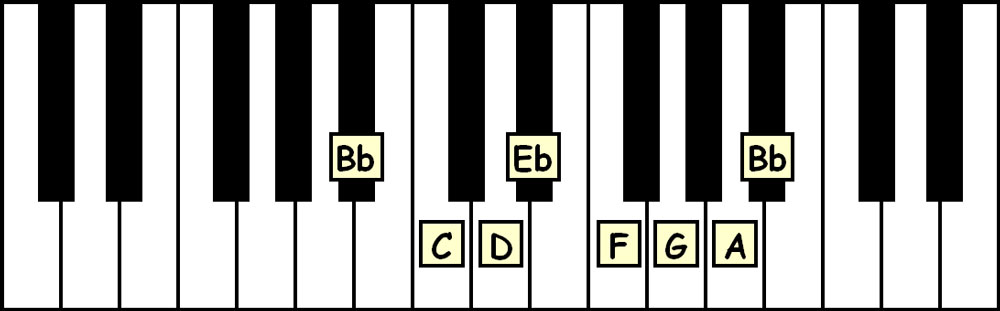
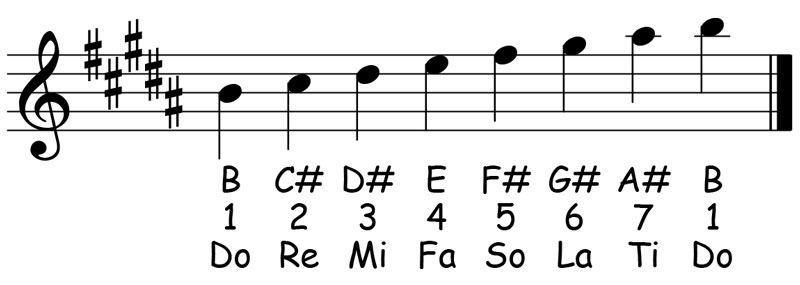
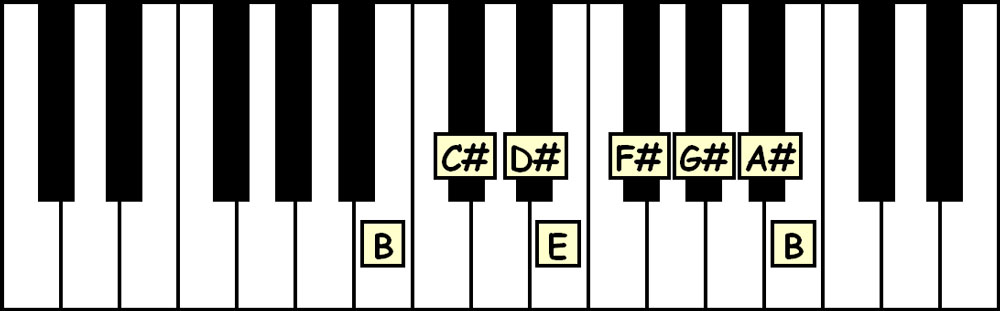
Showing the notation, key signature, letter names, scale degrees, solfege syllables, and keyboard layouts… arranged chromatically ascending (C, Db, D, Eb, E, F, Gb, G, Ab, A, Bb, B)…
Study Tips: Learn to spell each Major Scale just as you’d spell a seven-letter word… and interchangeably associate each letter name, scale degree, and Solfege syllable.
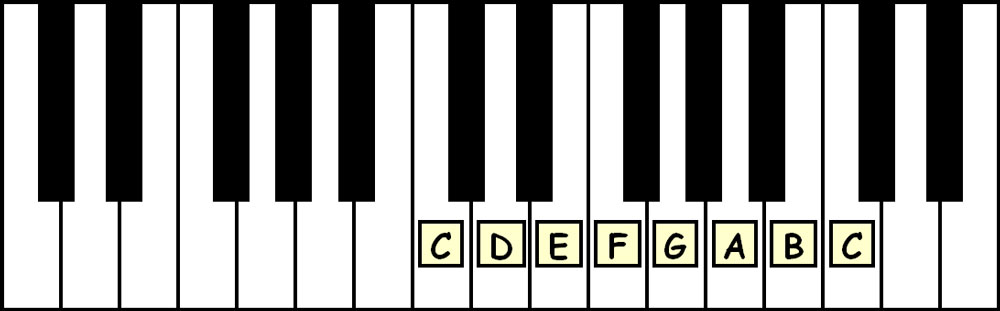
C Major
Say this aloud as you read and play: “The C Major Scale is spelled C-D-E-F-G-A-B-C.” (Also sing the scale degrees or solfege syllables out loud… ditto for all the keys below).

back to… Table of Contents
D Flat Major
Say this aloud as you read and play: “D flat Major is spelled Db-Eb-F-Gb-Ab-Bb-C-Db.”


back to… Table of Contents
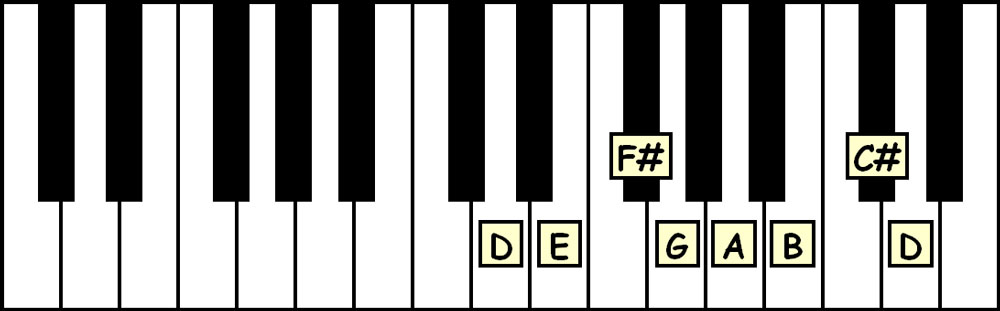
D Major
Say this aloud as you read and play: “D Major is spelled D-E-F#-G-A-B-C#-D.”

back to… Table of Contents
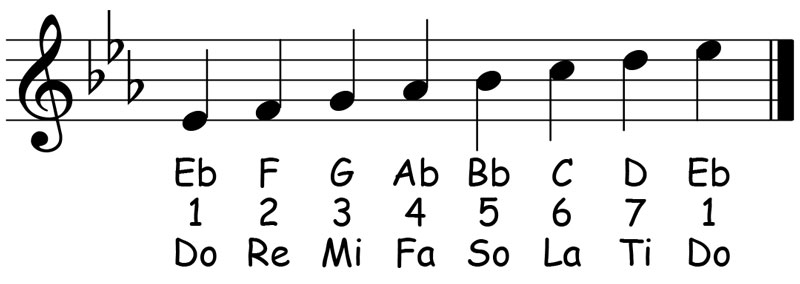
E Flat Major
Say this aloud as you read and play: “E flat Major is spelled Eb-F-G-Ab-Bb-C-D-Eb.”

back to… Table of Contents
E Major
Say this aloud as you read and play: “E Major is spelled E-F#-G#-A-B-C#-D#-E.”


back to… Table of Contents
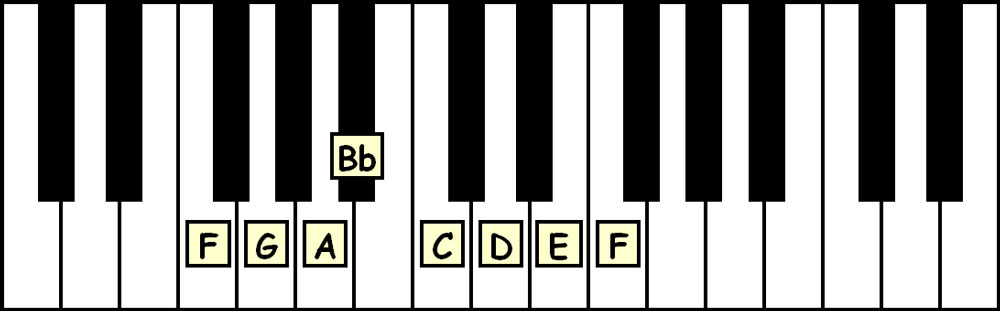
F Major
Say this aloud as you read and play: “F Major is spelled F-G-A-Bb-C-D-E-F.”

back to… Table of Contents
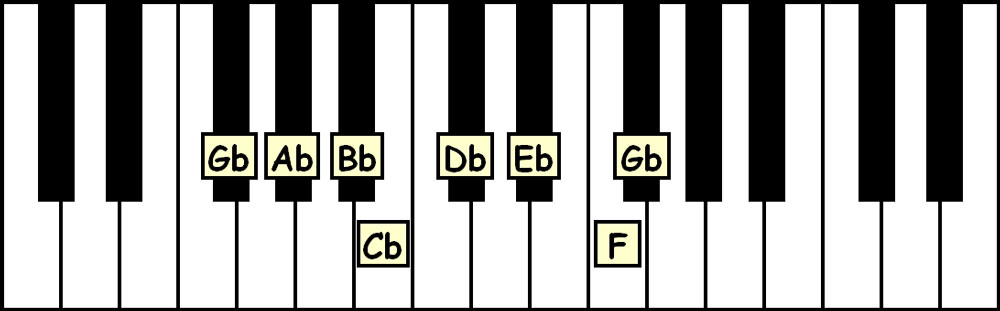
G Flat Major
Say this aloud as you read and play: “G flat Major is spelled Gb-Ab-Bb-Cb-Db-Eb-F-Gb.”

back to… Table of Contents
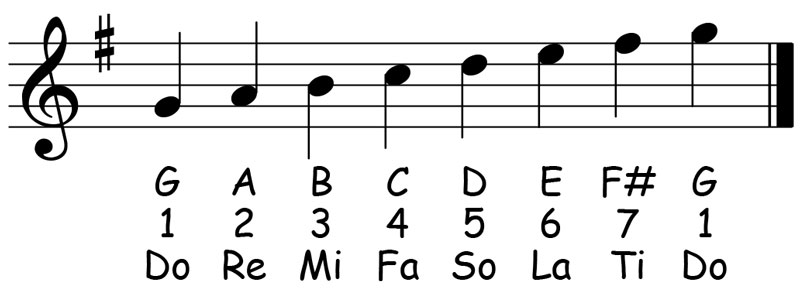
G Major
Say this aloud as you read and play: “G Major is spelled G-A-B-C-D-E-F#-G.”

back to… Table of Contents
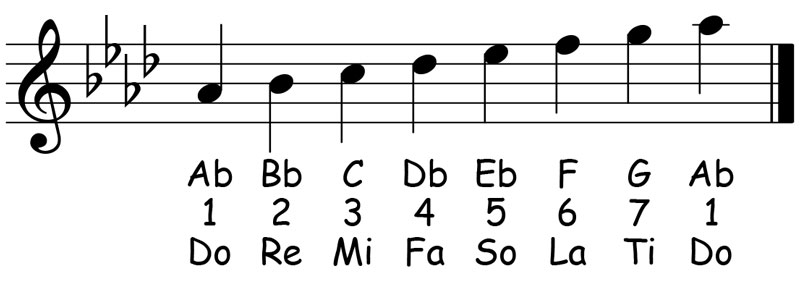
A Flat Major
Say this aloud as you read and play: “A flat Major is spelled Ab-Bb-C-Db-Eb-F-G-Ab.”

back to… Table of Contents
A Major
Say this aloud as you read and play: “A Major is spelled A-B-C#-D-E-F#-G#-A.”


back to… Table of Contents
B Flat Major
Say this aloud as you read and play: “B flat Major is spelled Bb-C-D-Eb-F-G-A-Bb.”

back to… Table of Contents
B Major
Say this aloud as you read and play: “B Major is spelled B-C#-D#-E-F#-G#-A#-B.”
back to… Table of Contents
Solfege Ear Training (MP3s)
To quickly internalize the sound-feeling of each Solfege Syllable in the Major Scale… a skill that will pay enormous dividends in your ability to read, memorize, transpose, improvise, and play by ear.

Format: Downloadable MP3s that allow you to do Solfege ear training almost anytime and anywhere: while doing the dishes, taking a walk, or driving your car!
Important Notes from Frank
As you do these, keep the following in mind:
- Solfege is relative pitch ear training with respect to a key center (Do).
- Don’t try to listen for intervals. The goal is recognize the unique sound-feeling of each note with respect to the key center.
- Succesful ear training is not about trying to hear something. It’s about being receptive to the sound-feeling you are experiencing and then associating that sound-feeling with something you already know– in this case the Solfege name.
- While all these MP3s are in the key of C major, the Solfege sound-feelings learned in C generalize to all keys because of the phenomenon of relative pitch generalization.
- You still need to do the left-brain work of mapping the Solfege names in each key to the notes in written music or physical keys on the keyboard.
- Don’t get too carried away with this. Do just enough to get a general feel for the unique sound-feeling of each Solfege syllable with respect to the key center Do. Once you start hearing in Solfege (you should start noticing results almost immediately), start getting your ear training directly from the music you want to play.
Download & Usage Instructions
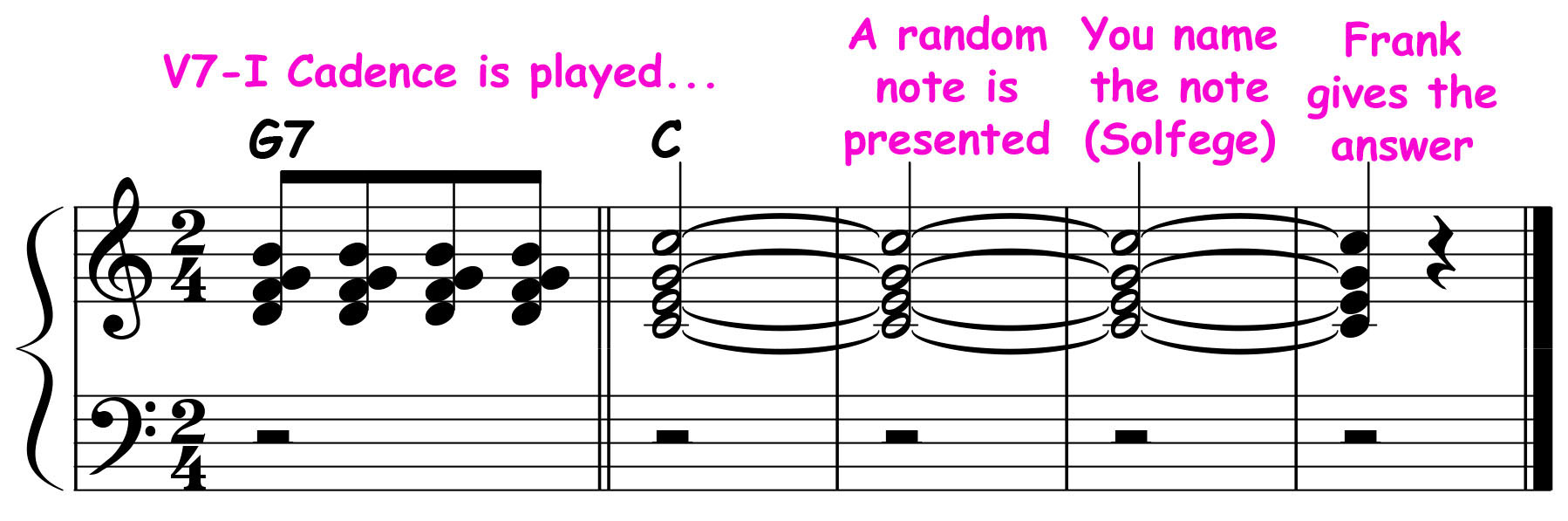
Each mp3 follows the same sequence…
- A G7 to C (V7 to I) cadence is played, clearly establishing the key center and tonality as C Major.
- A random note is presented (from 2 octaves below middle C to 2 octaves above middle C).
- You identify the pitch using its Solfege name: Do-Re-Mi-Fa-So-La-Ti.
- After a short pause, Frank gives the answer.
Listen to an example…
Think of these as audio flash cards with a timer that’s not too slow and not too fast. Simply download, unzip, create a playlist, set to random play, and enjoy the results!
back to… Table of Contents
The first time I looked at this page I glossed over the DO-X-DO exercise. Now I see that this is extremely valuable. Not only is this helping me “know” the notes, it also helps my ability to sing the notes.
🤜🤛 Thanks so much for the positive feedback. Music to my ears!!!
Hello Frank, I hope you are fine. This is your friend Saxman. I have been following your concept of singing the “Solfege out loud when playing so as to internalize the sound feeling” Please as a saxophone player, is there any technique I can use when “studying” do re me fa so…
I’m doing ok, Saxman. Good to hear from you and thanks for asking.
Three possibilities (there may be others):
1. “Sing” each syllable in your mind’s ear as you play.
2. Pick the notes out on a keyboard (real of virtual)
3. Use and ear training app (there are hundreds of them)
I hope that helps.
Please let me know how I may otherwise be of service.
All the best to you in music and life!
Hi Frank, this the Saxman from Ghana. Thank you for spending your priceless time and given me a reply so quick. I’m told by the music spirit in me that You’ve advised me on the accurate suggestions. I will practice them and give you a feedback 6 months from now. Thank you so much.
Nice to hear from you, Saxman. With the help of the music spirit I believe you will make huge progress in 6t hours, not 6 months! All the best to you in music and life.