Learn-by-doing lessons for quickly internalizing the Japanese Scale… by ear, intellect, eye, and muscle…
Table of Contents
Lesson Goal
To quickly internalize the letter names, scale degrees, solfege, notation, sound, feeling, and visuospatial keyboard layout for the Japanese Scale… in all keys.
Prerequisites
Basic music reading skills… the LOVE of music… and the discipline to study and practice.
Japanese Scale Theory
- The Solfege Syllables for the Japanese Scale are Do-Ra-Fa-So-Le-Do (no matter what key you are in).
- The Scale Degrees for the Japanese Scale are 1-b2-4-5-b6-1 (no matter what key you are in).
- The notes for the Japanese Scale in the key of C are C-Db-F-G-Ab-C…

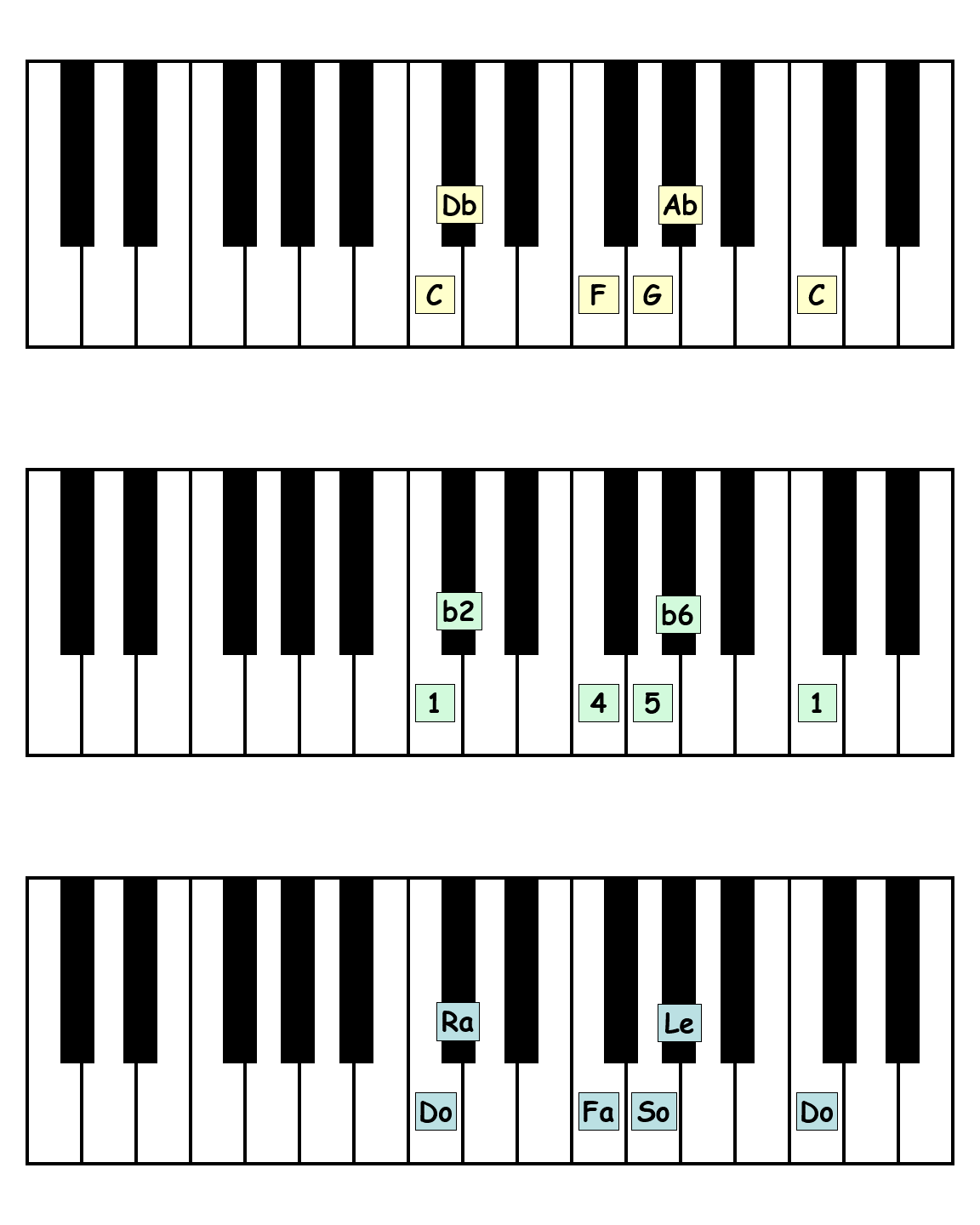
Notice how the absence of a major 3 (Mi) or minor 3 (Me) gives this deliciously distinctive scale from the Land of the Rising Sun its tonally ambiguous and wonderfully dreamy quality.
back to… Table of Contents
Comparative Scale Study
Notice that the Japanese Scale is a subset of the Middle Eastern Scale… and notice the dramatic effect of removing two notes: Mi and Ti, creating a dreamy quality that is instantly recognizable!
Japanese Scale Solfege Ear Training
Reading, playing, and singing the Solfege syllables out loud is an extremely effective way to tune up your ears and to internalize the unique sound-feeling of each note in the scale with respect to the key center Do. Make sure to do this slowly enough for the unique sound-feeling of each Solfege syllable to make a meaningful impression on your mind’s ear.
Linear, Ascending…

Linear, Descending…

Do-X-Do, Ascending…

Do-X-Do, Descending…

Special Note about Ear Training in Context
We could sing a lot more musical patterns, but a more effective and efficient approach (80:20 Rule) is to get your ear training material directly from the music that YOU want to play!
back to… Table of Contents
Japanese Scale Theory & Ear Training, All Keys
Any interest? Frank will be happy to produce scores, keyboard layouts, and play along MP3s if someone asks.
back to… Table of Contents