Play along practice tracks for quickly internalizing the Minor Pentascales in all keys… by ear, intellect, eye, and muscle…
Table of Contents
Lesson Goals
To quickly internalize the letter names, scale degrees, solfege, notation, sounds, feelings, and visuospatial keyboard layouts for the Minor Pentascales in all keys.
Prerequisites
Basic music reading skills (optional)… the LOVE of music… and the discipline to study and practice.
Study, Practice, & Performance Tips
- Never play these mindlessly and mechanically. Always aspire to play musically.
- Your goal is not to merely memorize these, but to study and practice them until you internalize them using all four musical intelligences: ears, intellect, eyes, and muscles.
- Every time you practice something, you are programming your brain. So always play accurately.
- Practice with a click track or rhythm track. Doing so will give you immediate feedback on any rhythmic misconceptions or places where your timing gets sloppy.
- Record yourself. Always. Listen to the playback immediately. And ask yourself: Is that what you intended to play?”
- If anything feels tense or awkward, stop immediately and experiment with alternative fingerings or choreography.
- Play this in other keys you expect to play in. By the way, once you see the patterns (which is guaranteed if you know your scales and chords) finding the notes in other keys will be a piece of cake!
- If you feel stuck or overwhelmed, realize that anything can and will be mastered if you slow things down or break things down to small enough pieces.
back to… Table of Contents
Minor Pentascales & Minor Triads
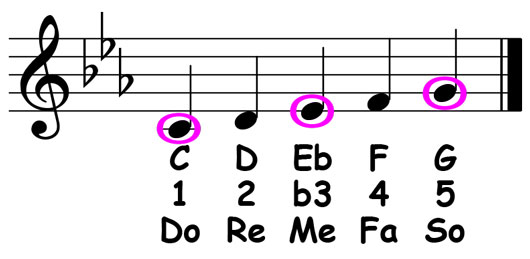
It’s crucial to understand, see, hear, and feel the following:
- The minor pentascale (1-2-b3-4-5 / Do-Re-Me-Fa-So) and tonic minor triad (1-b3-5 / Do–Me–So) are inseparably interrelated and overlap each other.
- Do(1), Me(b3), and So(5) in the minor pentascale and Do(1), Me(b3), and So(5) in the minor triad are the very same notes.
- Me(b3) is what makes both the scale and chord sound and feel minor.
back to… Table of Contents
Minor Pentascales, All Keys
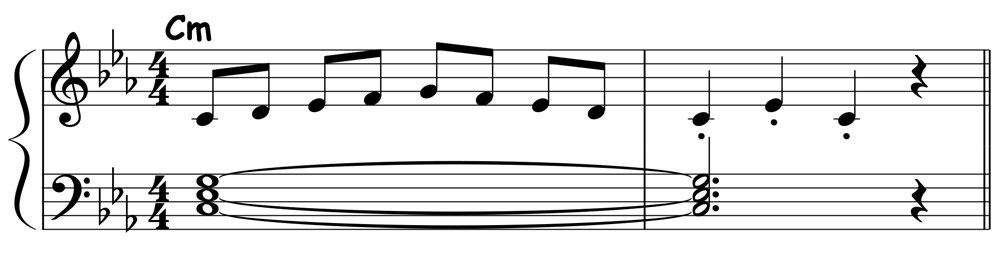
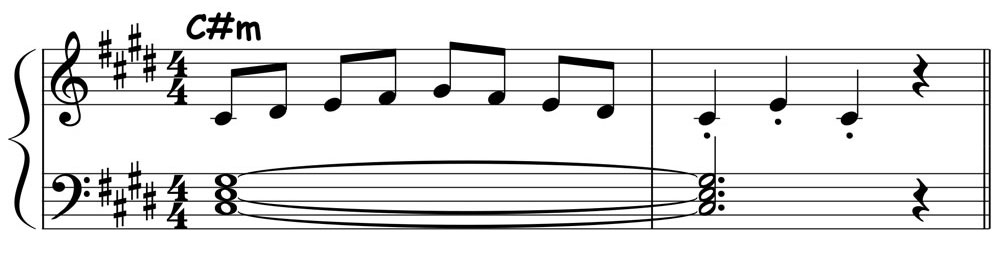
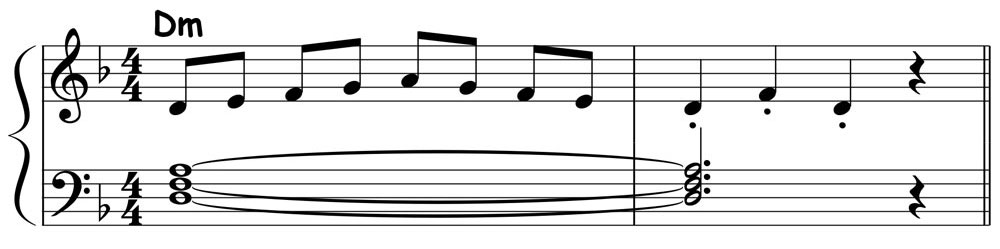
Short and sweet studies designed to help you quickly learn to read, hear, feel, and play the minor pentascale and its companion tonic minor triad… arranged chromatically ascending through all the minor keys…
Notice how it sounds and feels right… and makes musical sense for the chord tones 1, b3, and 5 to fall on downbeats!
C Minor Pentascale
C Sharp Minor Pentascale
D Minor Pentascale
E Flat Minor Pentascale

E Minor Pentascale
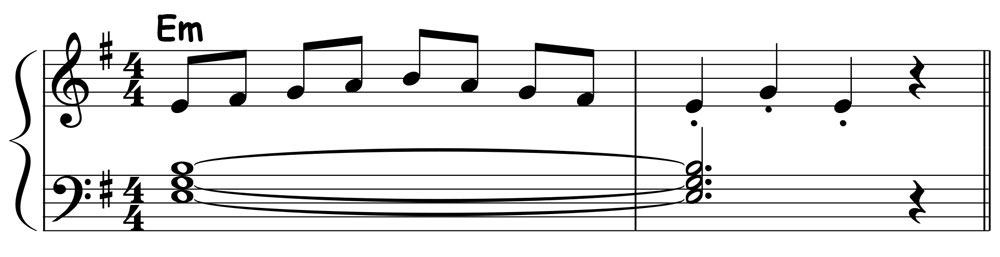
F Minor Pentascale
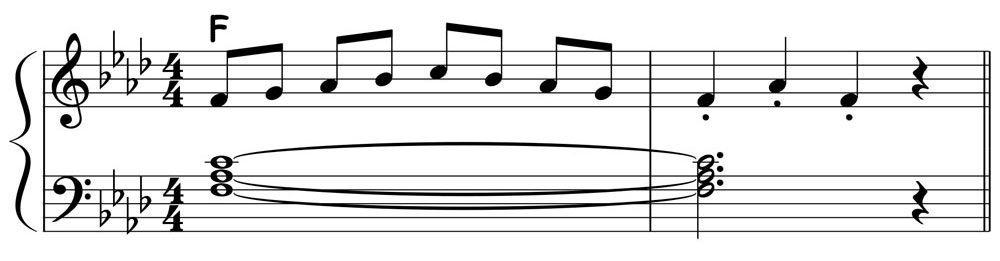
F Sharp Minor Pentascale
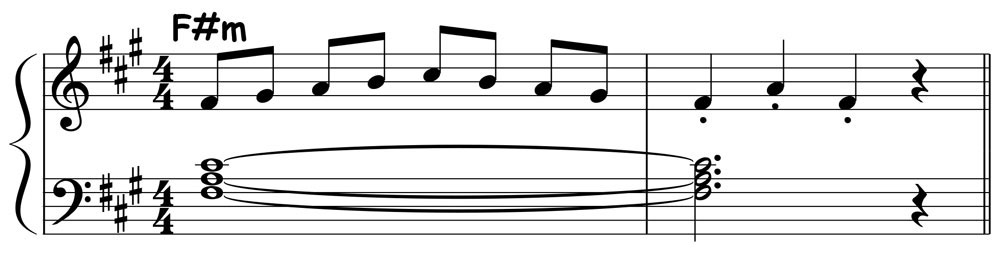
G Minor Pentascale
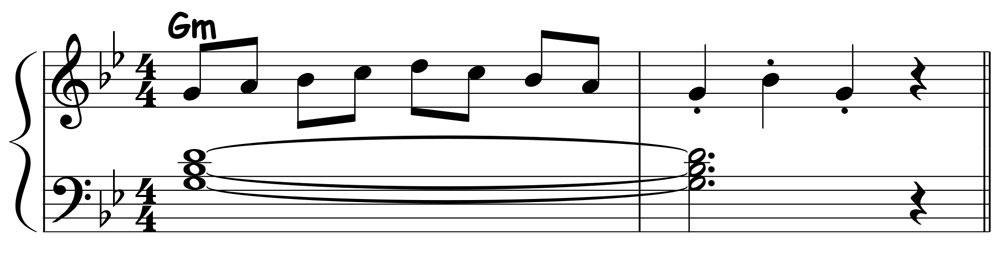
G Sharp Minor Pentascale
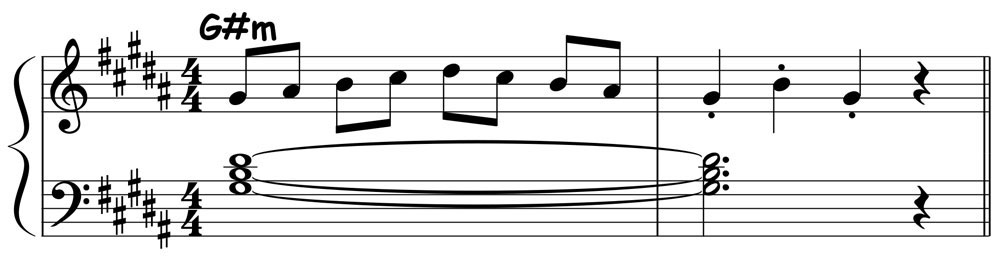
A Minor Pentascale

B Flat Minor Pentascale
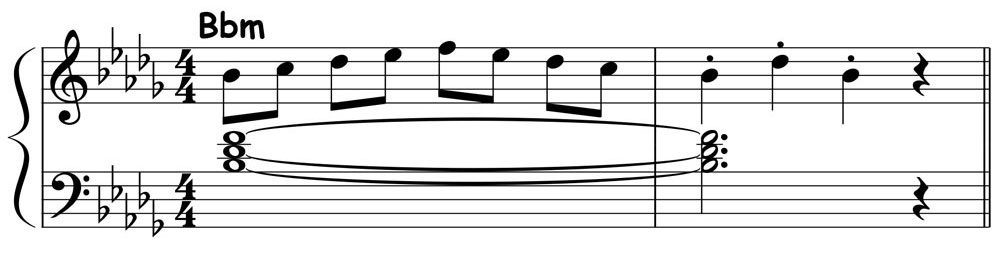
B Minor Pentascale
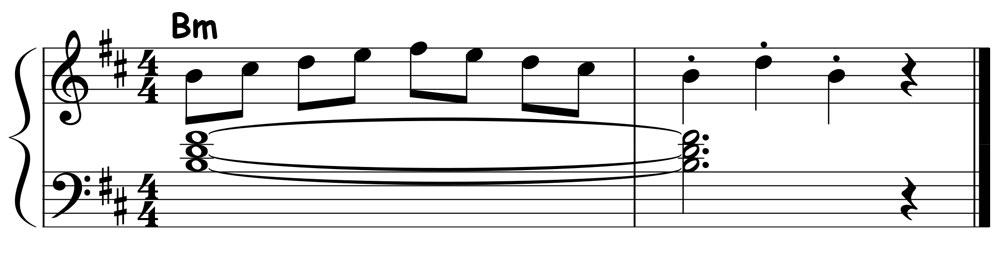
Minor Pentascales Play Along Tracks (MP3s)
The benefits of playing along with a click track at various tempos cannot be overstated: very slowly at first (60-80 bpm) to have enough time to “think about everything”, then fast enough (160-180 bpm) to be forced to “play without thinking”.
Minor Pentascales Practice, All Keys @ 60 bpm
Minor Pentascales Practice, All Keys @ 80 bpm
Minor Pentascales Practice, All Keys @ 100 bpm
Minor Pentascales Practice, All Keys @ 120 bpm
Minor Pentascales Practice, All Keys @ 140 bpm
Minor Pentascales Practice, All Keys @ 160 bpm
Minor Pentascales Practice, All Keys @ 180 bpm
Buy Frank a cup of coffee (Donations Page) and he’d be happy to send you a zip file that includes a high-res pdf of the score and all the play along tracks for the minor pentascales above (and, as bonus, for the major pentascales, too!)
back to… Table of Contents