Learn-by-doing lessons for quickly internalizing the Harmonic Minor Scale… by ear, intellect, eye, and muscle…
Table of Contents
Lesson Goals
To quickly internalize the letter names, scale degrees, solfege, notation, sounds, feelings, and visuospatial keyboard layouts for the Harmonic Minor Scale in all keys.
Prerequisites
Basic music reading skills… the LOVE of music… and the discipline to study and practice.
Why Learning the Harmonic Minor Scale is So Important
The Harmonic Minor Scale is used in a wide variety of music all around the world: classical, jazz, pop, and more.
back to… Table of Contents
About the Name “Harmonic”
The harmonic minor scale is no more “harmonic” than the natural or melodic minor scales. So, don’t get hung up on the name. What matters is this: The distinguishing feature is the note Ti, called the leading tone, because it strongly leads the ear back to the key center Do melodically. At the same time, Ti is the “3” of the dominant V chord which craves resolution back to the tonic i chord harmonically. By the way, this dominant V(7) to tonic i chord progression is essential to making the overwhelming majority of minor key European classical music tick.
back to… Table of Contents
Harmonic Minor Scale Theory
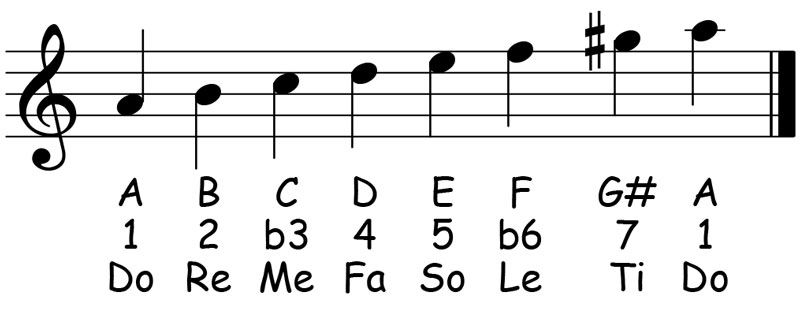
- The Solfege Syllables for the Harmonic Minor Scale are Do-Re-Me-Fa-So-Le-Ti-Do (no matter what key you are in).
- The Scale Degrees for the Harmonic Minor Scale are 1-2-b3-4-5-b6-7-1 (no matter what key you are in).
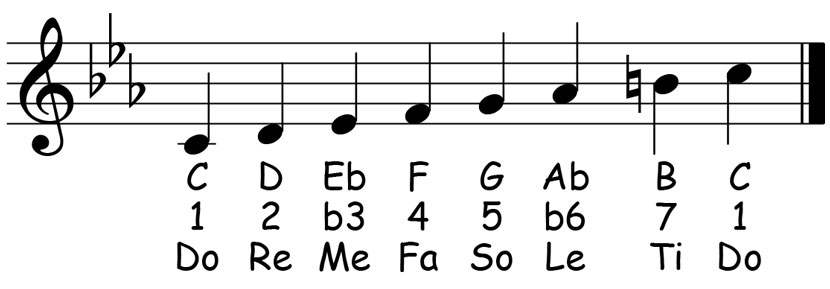
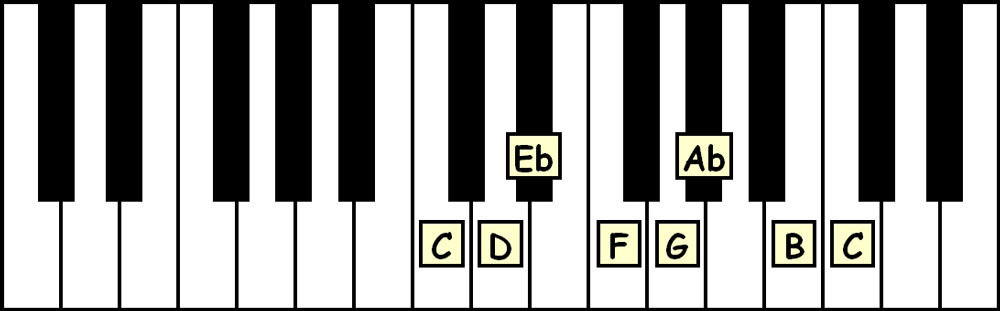
- The notes for the Harmonic Minor Scale in the key of C are C-D-Eb-F-G-Ab-B-C…
It’s common practice to use the key signature for the Natural minor scale and to use an accidental to identify the leading tone Ti(7) in the Harmonic minor scale as follows…


Harmonic Minor Scale Compared to Other Minor Scale Types
Notice the following commonalities and differences between the various minor scale types:
- The Natural Minor Scale uses the exact same Minor Pentascale as both the Melodic Minor Scale and Harmonic Minor Scale.
- Play and sing the Natural Minor Scale and Harmonic Minor Scale side-by-side, slowly enough to hear the melodic-harmonic difference between Ti and Te. Pay special attention to the unique pull each note has toward Do.
back to… Table of Contents
Harmonic Minor Scale Solfege Ear Training
Reading, playing, and singing the Solfege Syllables out loud is an extremely effective way to tune up your ears and to internalize the unique sound-feeling of each note in the scale with respect to the key center Do. Make sure to do this slowly enough for the unique sound-feeling of each Solfege Syllable to make a meaningful impression on your mind’s ear.
Linear, Ascending…

Linear, Descending…

Do-X-Do, Ascending…

Do-X-Do, Descending…

Note: While it’s possible to continue by singing a bunch of other musical patterns, the 80:20 Rule teaches us that a more efficient approach is to get your ear training material directly from the music that YOU want to play!
back to… Table of Contents
Harmonic Minor Scale Theory, All Keys
Showing the notation, key signature, letter names, scale degrees, solfege syllables, and keyboard layouts in 12 keys…arranged chromatically ascending (C, C#, D, Eb, E, F, F#, G, G#, A, Bb, B)…
C Harmonic Minor
Say this aloud as you read and play (*): “The C Harmonic Minor Scale is spelled C-D-Eb-F-G-Ab-B-C.” (Also sing the scale degrees or solfege syllables out loud… ditto for all the keys below).
(*) Don’t worry about fingerings right now. The goal here is learn how to read the notes and connect this to where they are on the keyboard. (In fact, it’s perfectly fine and maybe even preferrable to play these with one finger for now so that you don’t instill poor technical habits).
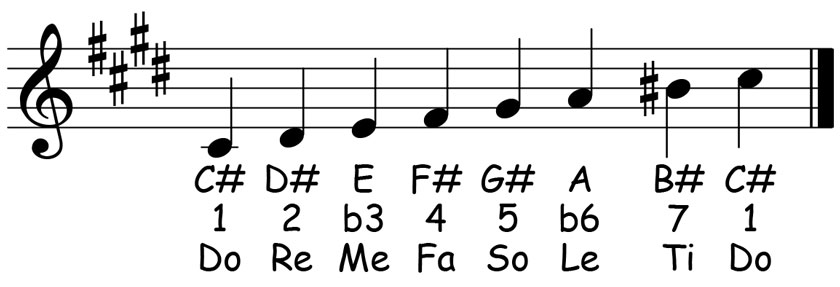
C Sharp Harmonic Minor
Say this aloud as you read and play: “C sharp Harmonic Minor is spelled C#-D#-E-F#-G#-A-B#-C#.”

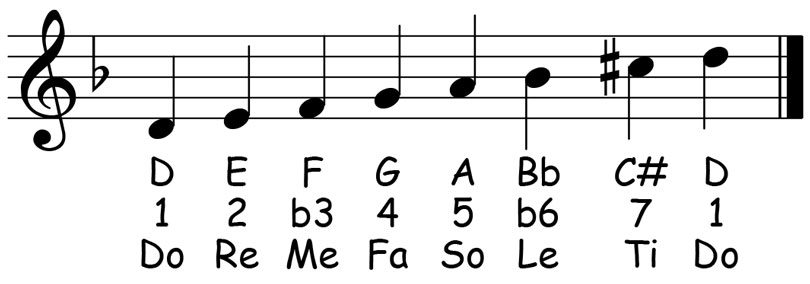
D Harmonic Minor
Say this aloud as you read and play: “D Harmonic Minor is spelled D-E-F-G-A-Bb-C#-D.”

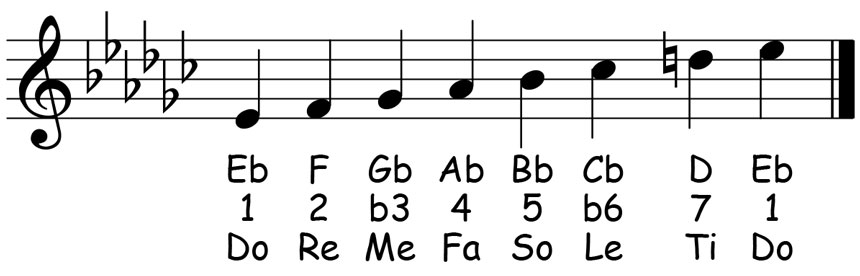
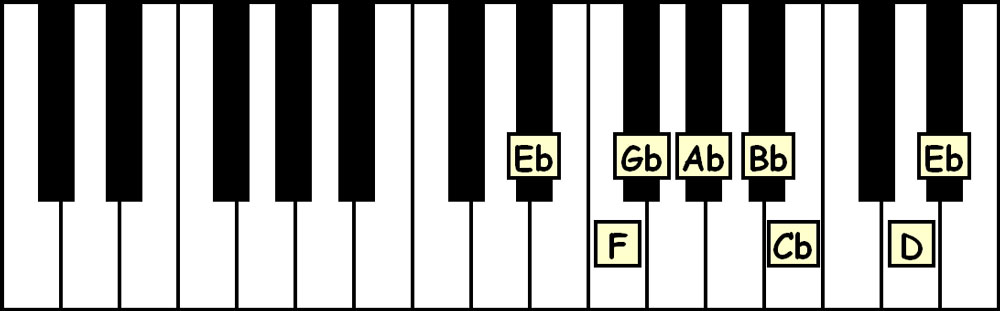
E Flat Harmonic Minor
Say this aloud as you read and play: “E flat Harmonic Minor is spelled Eb-F-Gb-Ab-Bb-Cb-D-Eb.”
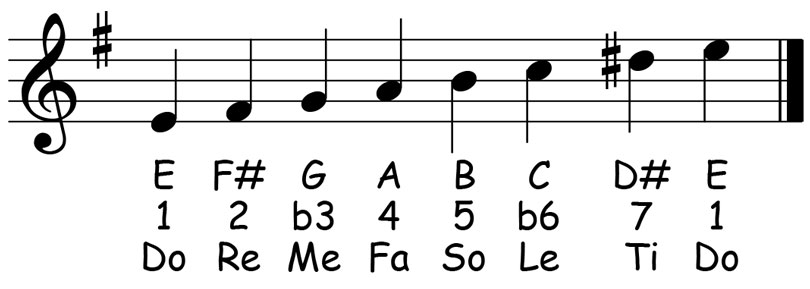
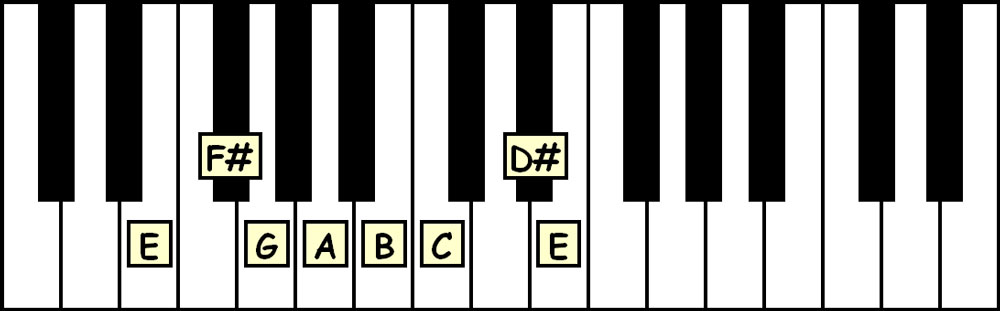
E Harmonic Minor
Say this aloud as you read and play: “E Harmonic Minor is spelled E-F#-G-A-B-C-D#-E.”
F Harmonic Minor
Say this aloud as you read and play: “F Harmonic Minor is spelled F-G-Ab-Bb-C-Db-E-F.”


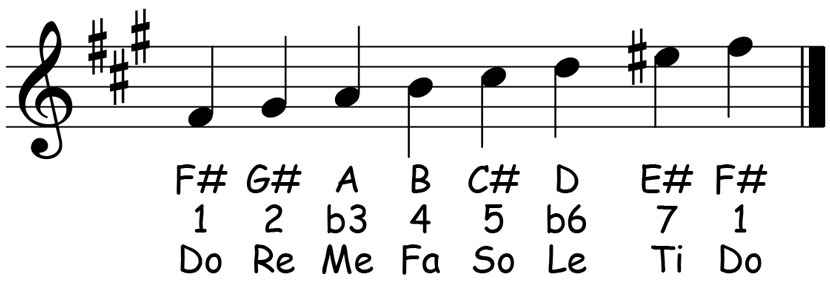
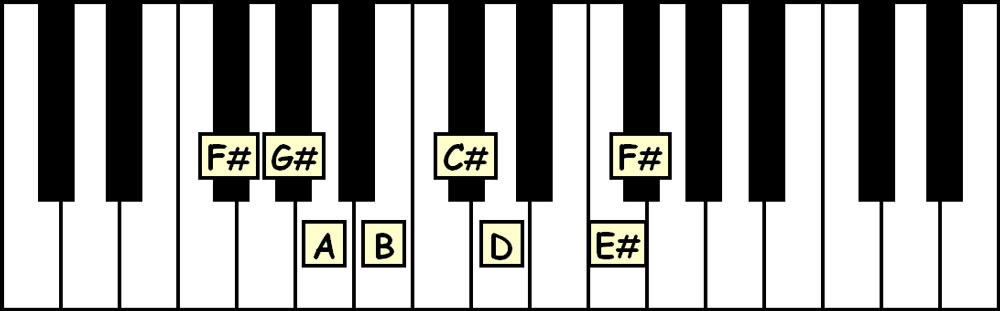
F Sharp Harmonic Minor
Say this aloud as you read and play: “F sharp Harmonic Minor is spelled F#-G#-A-B-C#-D-E#-F#.”
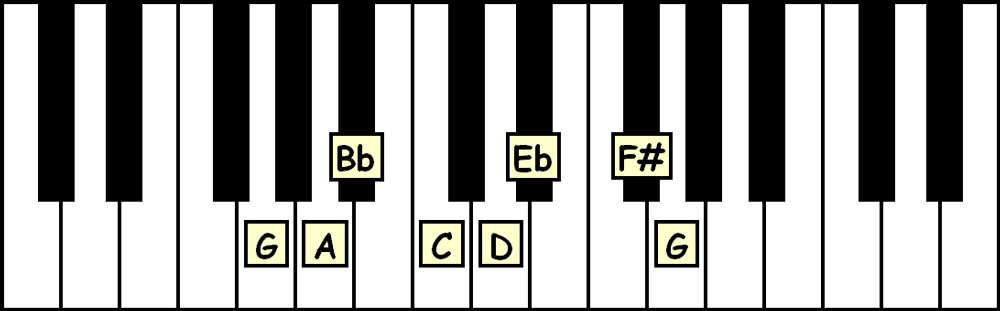
G Harmonic Minor
Say this aloud as you read and play: “G Harmonic Minor is spelled G-A-Bb-C-D-Eb-F#-G.”

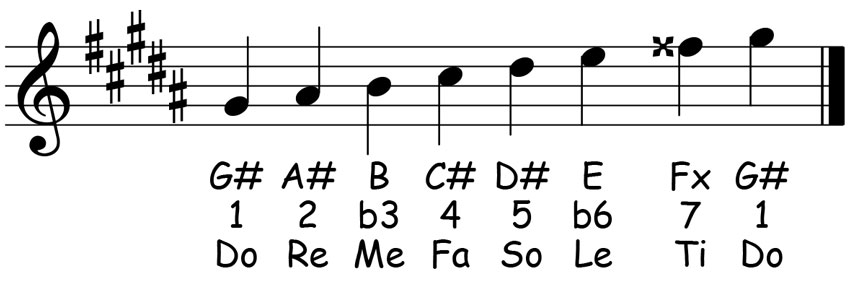
G Sharp Harmonic Minor
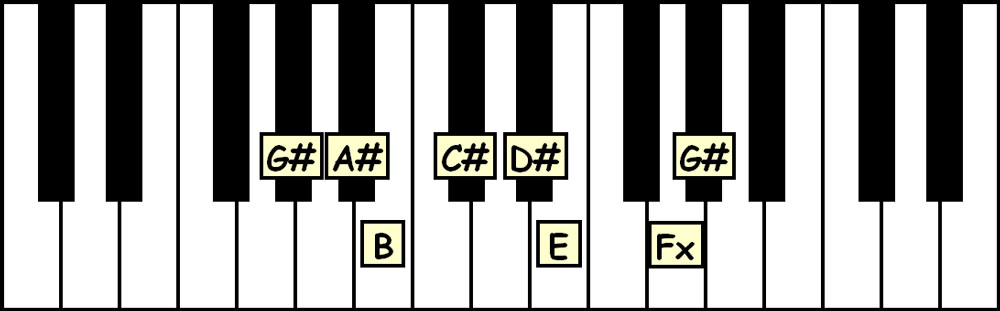
Say this aloud as you read and play: “G sharp Harmonic Minor is spelled G#-A#-B-C#-D#-E-Fx(double sharp)-G#.”
A Harmonic Minor
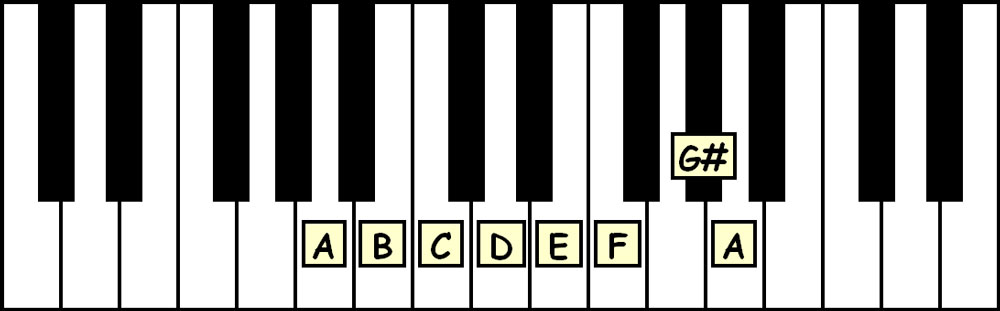
Say this aloud as you read and play: “A Harmonic Minor is spelled A-B-C-D-E-F-G#-A.”
B Flat Harmonic Minor
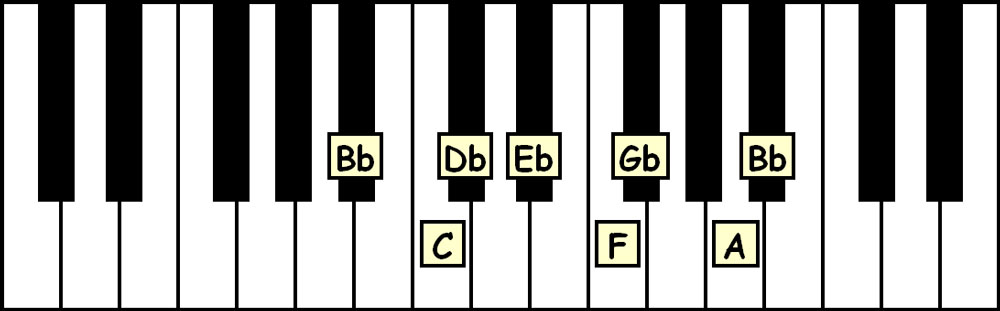
Say this aloud as you read and play: “B Flat Harmonic Minor is spelled Bb-C-Db-Eb-F-Gb-A-Bb.”

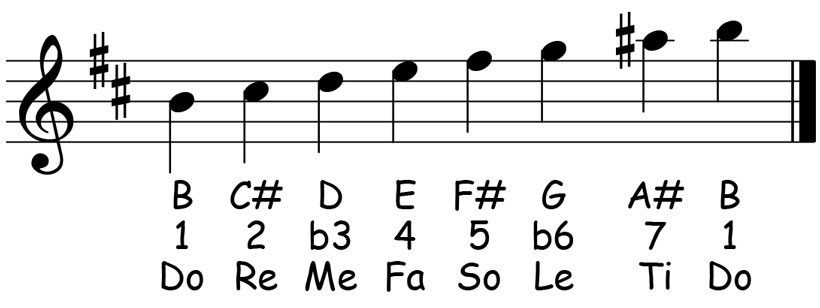
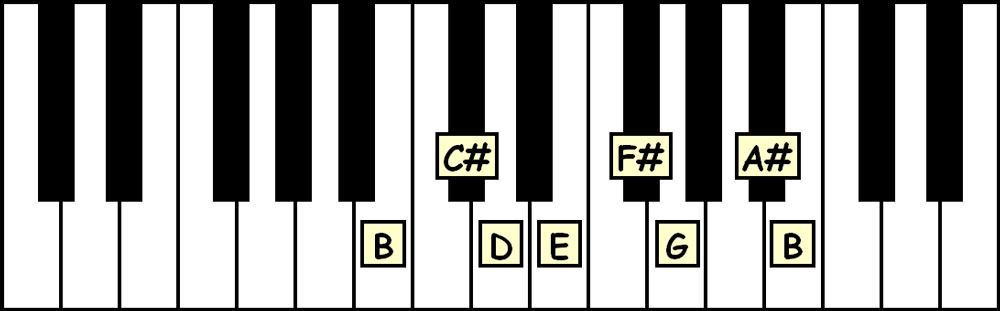
B Harmonic Minor
Say this aloud as you read and play: “B Harmonic Minor is spelled B-C#-D-E-F#-G-A#-B.”
back to… Table of Contents