An illuminating lesson in Tonality and how different tonalities can be used to change the mood of a musical idea…
Table of Contents
Lesson Goals
To understand what tonality means and how to use different tonalities when you compose and improvise in order to create different moods.
Prerequisites
Basic music reading skills… the LOVE of music… and the discipline to study and practice.
Three Commonly Used Tonalities
For the purpose of this lesson, let’s pretend that we are going to play a piece of music using three different tonalities: Major, Mixolydian, and Dorian… all using the same key center D.
D Major Tonality
D Major Tonality is defined by the D Major Scale, as follows…
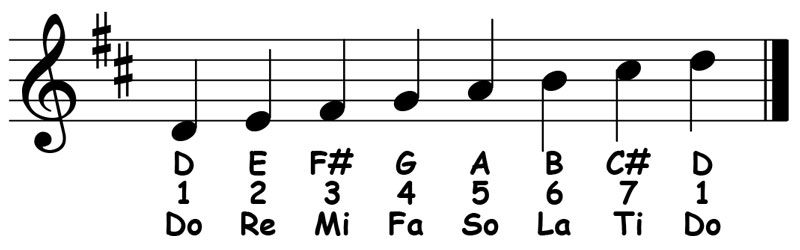
The two most interesting notes are F# (3, Mi) which give this it’s major sound and C# (7, Ti) which has a “classical” quality and wants to resolve to D (1,Do).
D Mixolydian Tonality
D Mixolydian Tonality is defined by the D Mixolydian Scale, as follows…
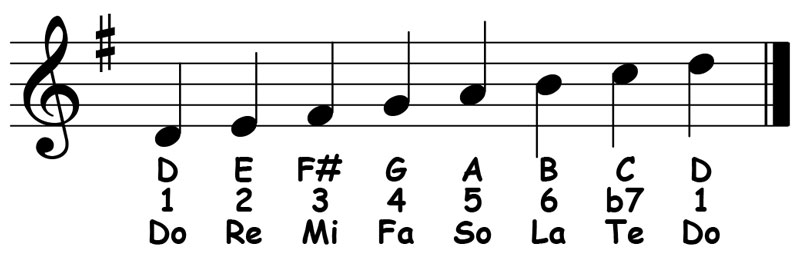
The two most interesting notes are F# (3, Mi) which give this it’s major sound and C (b7, Te) which which has a primitive quality and wants to resolve to D (1,Do).
D Dorian Tonality
D Dorian Tonality is defined by the D Dorian Scale, as follows…
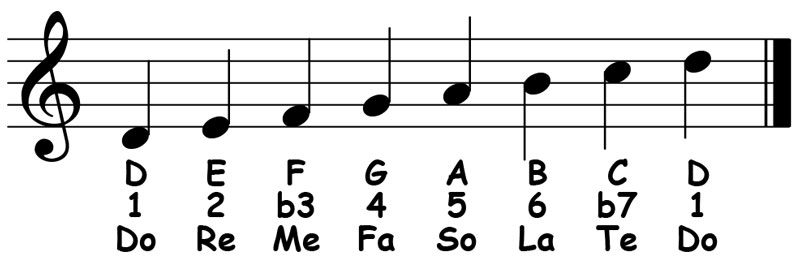
The two most interesting notes are F (b3, Me) which give this it’s minor sound and C (b7, Te) which has a primitive quality and wants to resolve to D (1,Do).
Irish Jig Played in Three Tonalities
Irish Jig, D Major Tonality
Here’s one possible rendition for the Irish Jig played using Major Tonality in the key of D…

Do you hear and feel the bright major quality created by the note F# (Mi) and the harmonic tension created by the leading tone C# (Ti) in the A7 chord?
Irish Jig, D Mixolydian Tonality
Here’s one possible rendition for the Irish Jig played using Mixolydian Tonality in the key of D…
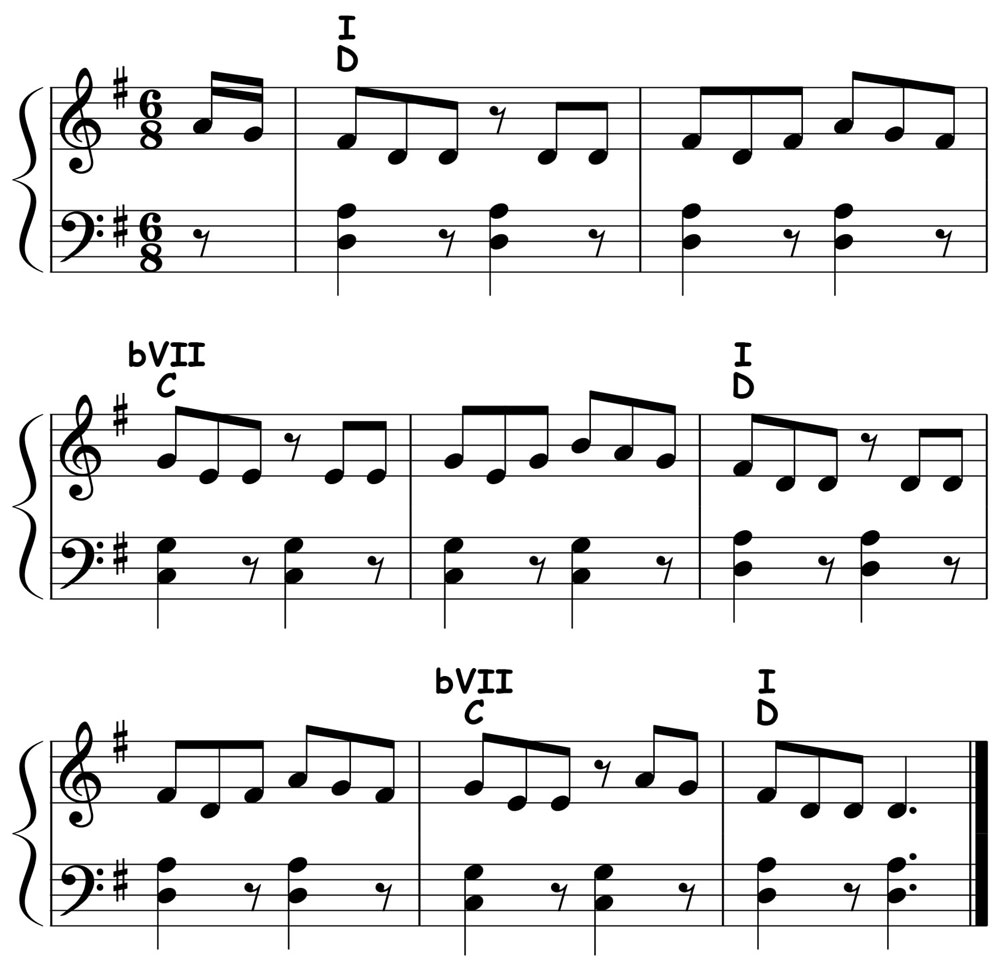
Do you hear and feel the bright major quality created by the note F# (Mi) and the more primitive harmonic tension created by the note C (Te)?
Irish Jig, D Dorian Tonality
Here’s one possible rendition for the Irish Jig played using Dorian Tonality in the key of D…
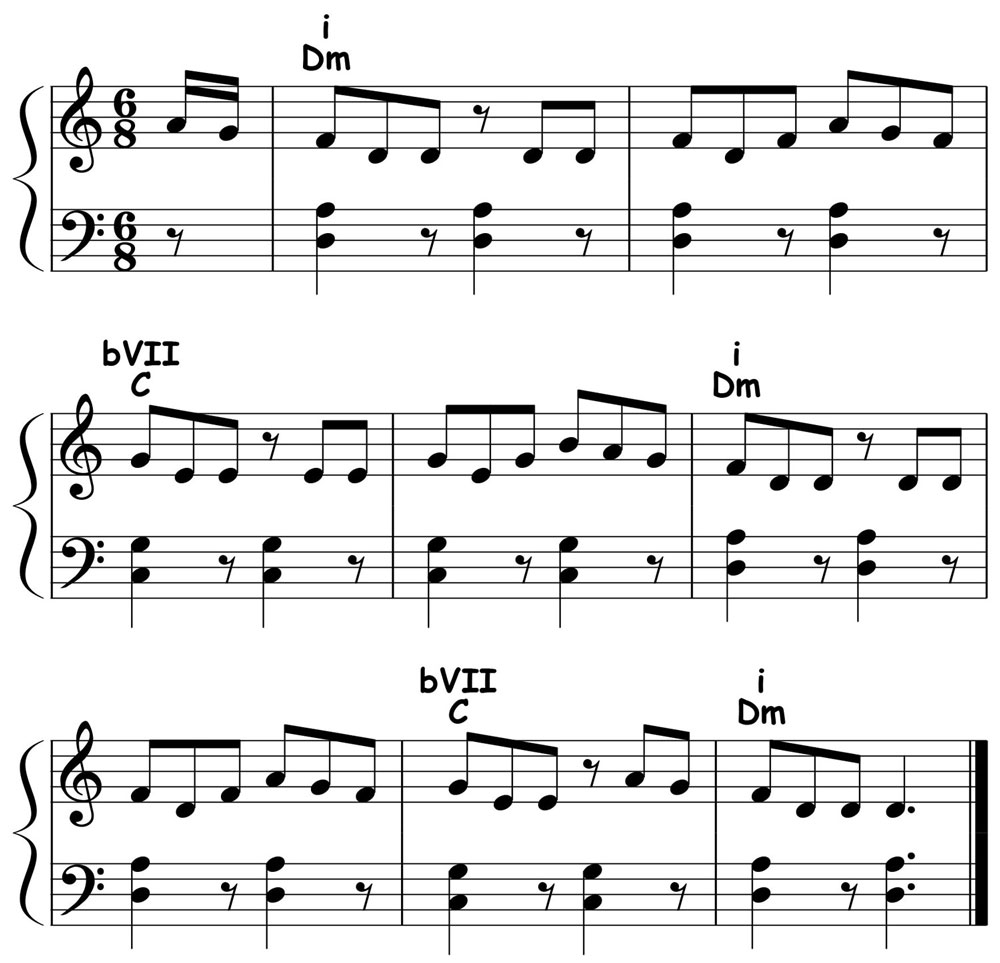
Do you hear and feel the dark minor quality created by the note F (Me) and the primitive harmonic tension created by the note C (Te) in the C chord?
Takeaways
- Changing just one or two notes in a scale completely transforms how it sounds and feels.
- Playing in a different tonality is a simple matter of adjusting the notes in the melody to suit the tonality.
- Playing in a different tonality is a simple matter of adjusting the notes in the chords to suit the tonality.
- When you really “know your scales” such transformations are a piece of cake.
- “Knowing your scales” requires that you internalize them using all four musical intelligences: ears, intellect, eyes, and muscles.
learn more… How Music Works