Lesson Goal: To understand the Number System for describing Chord Structure… and to use this system for internalizing commonly-used chord types…
Table of Contents
Learning Goals
To understand the value of using the number system for describing chord structure and to start using it to internalize patterns that make various chord types look, sound, and feel the way they do.
Prerequisites
Basic music reading skills… the LOVE of music… and the discipline to study and practice.
Benefits of Learning the Chord Structure Number System
The number system is a commonly-used convention for describing the structure of any kind of chord and enables musicians to talk about chord types and how they are constructed with accuracy, clarity, and ease… as you will discover in the examples below…
How the Chord Structure Number System Works
The number system for describing chord structure works as follows: Using the major scale as the point of reference, numbers (also called “scale degrees”) are assigned to each note in ascending order…
For example, in the key of C: C=1, D=2, E=3, F=4, G=5, A=6, B=7…For example, in the key of C: C=1, D=2, E=3, F=4, G=5, A=6, B=7…
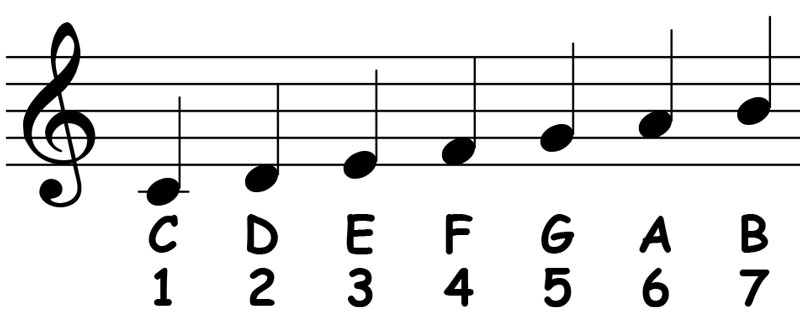
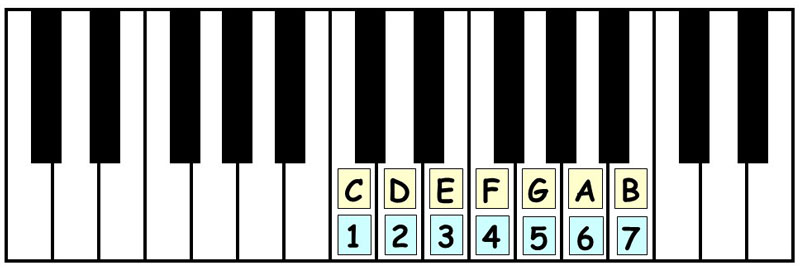
- The number “1” always represents the root of the chord. Always!
- The other numbers correspond to notes in the major scale beginning on the root note (1).
Chord Structures Larger than an Octave
You will also see chord structure numbers greater that a single octave. Specifically, chords that include “9ths”, “11ths”, and “13ths” are possible.
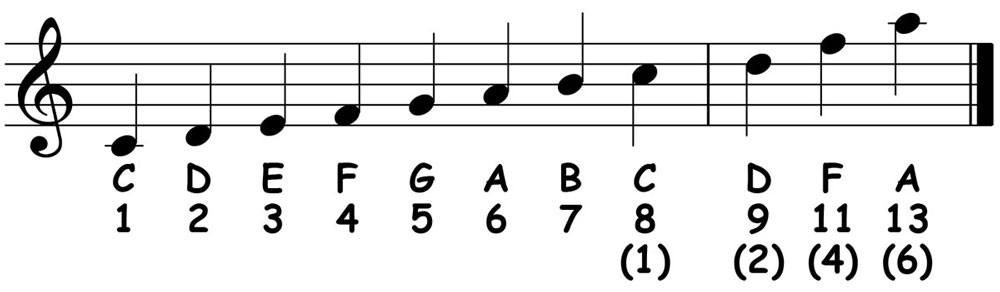
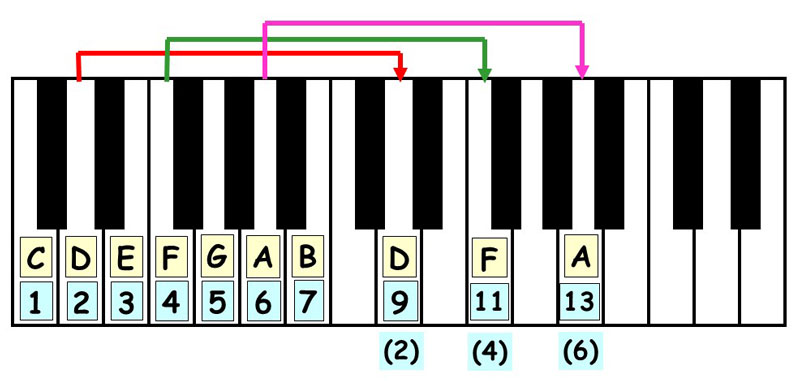
back to… Table of Contents
Chord Structures for Commonly Used Chord Types
Perfect 5th Interval (1-5)
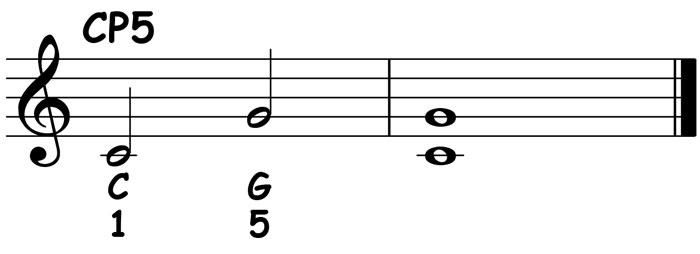
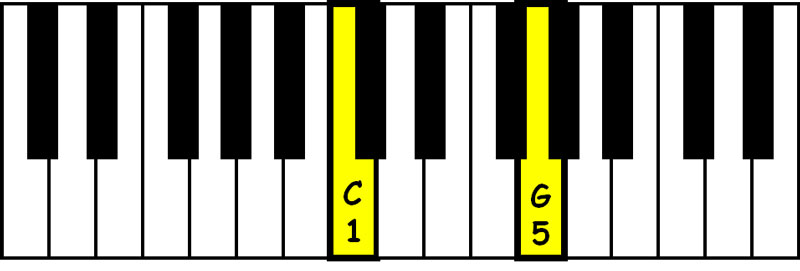
back to… Table of Contents
Power Chord (1-5-8)
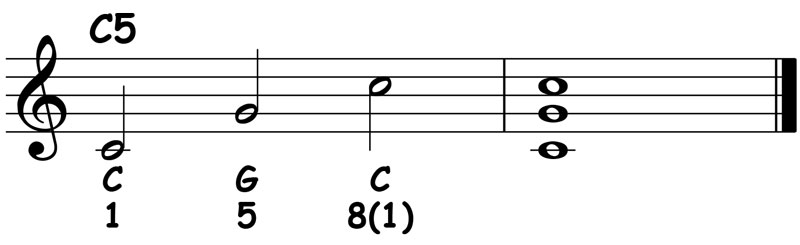
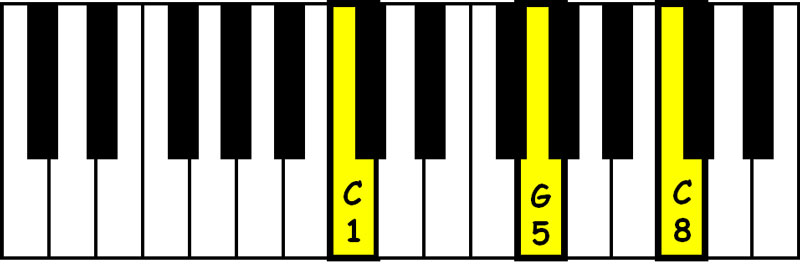
back to… Table of Contents
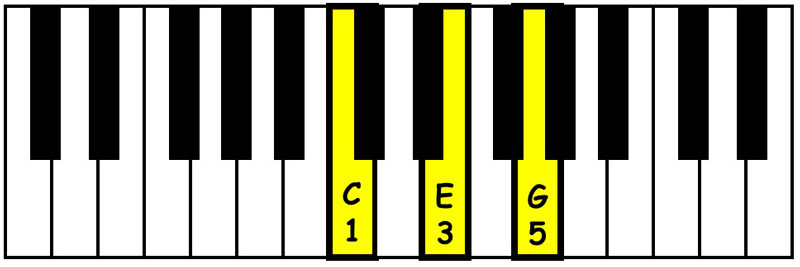
Major Triad (1-3-5)

back to… Table of Contents
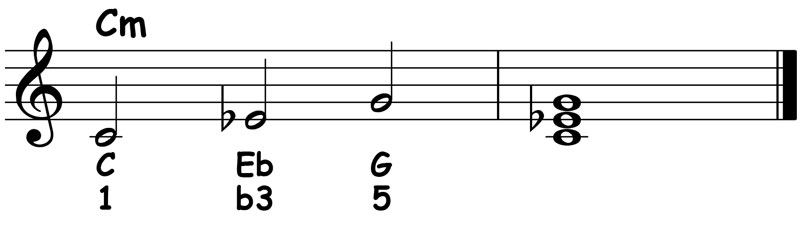
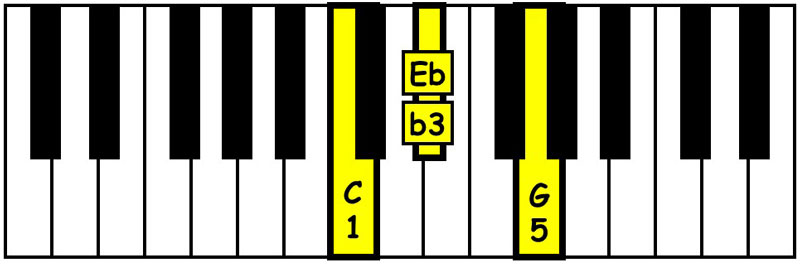
Minor Triad (1-b3-5)
Yes, you can modify any of the notes using flats…
back to… Table of Contents
Diminished Triad (1-b3-b5)


back to… Table of Contents
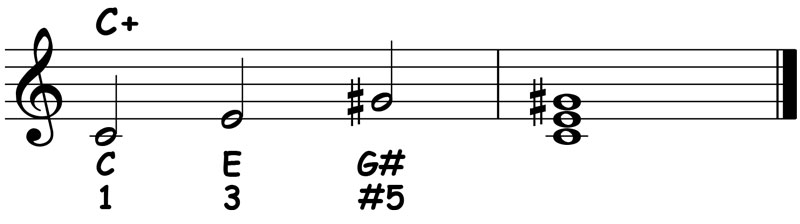
Augmented Triad (1-3-#5)
Yes, you can modify any of the notes using sharps…

back to… Table of Contents
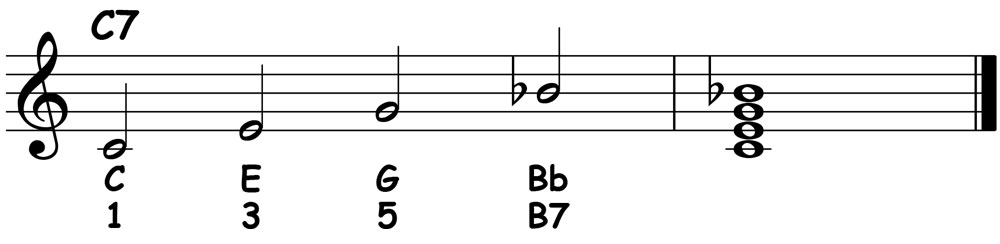
Dominant 7th Chord (1-3-5-b7)

back to… Table of Contents
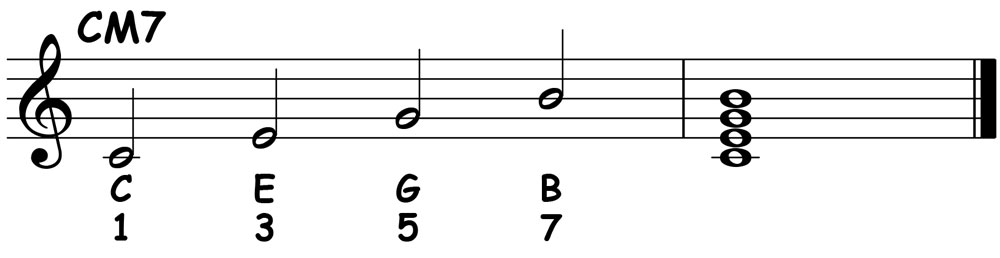
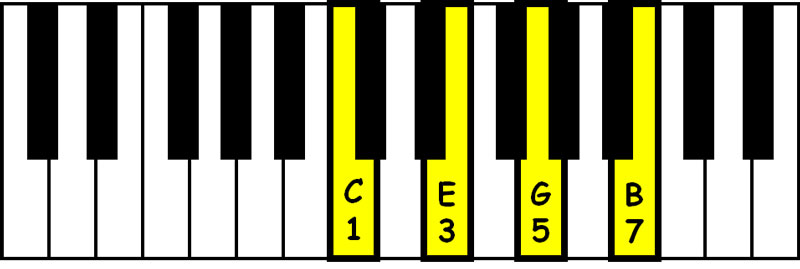
Major 7th Chord (1-3-5-7)
back to… Table of Contents
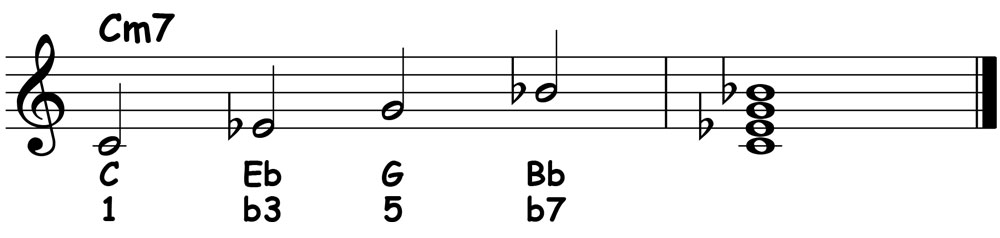
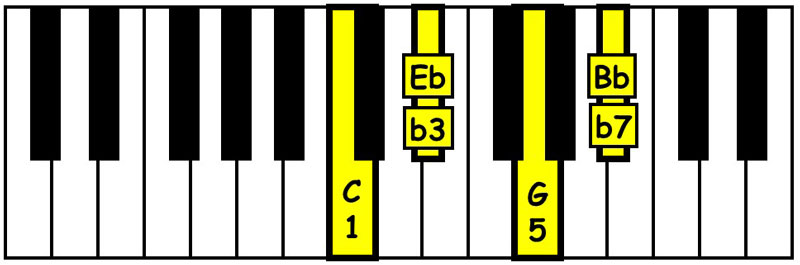
Minor 7th Chord (1-b3-5-b7)
back to… Table of Contents
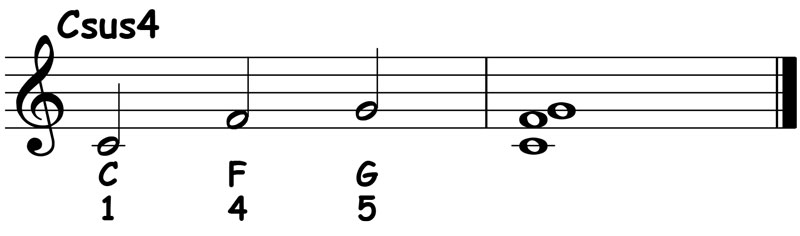
Sus4 Chord (1-4-5)
For a Csus4 chord…

back to… Table of Contents
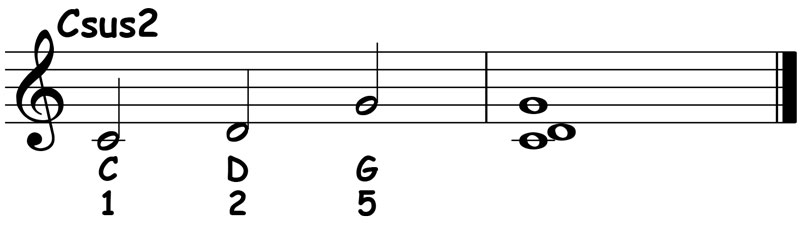
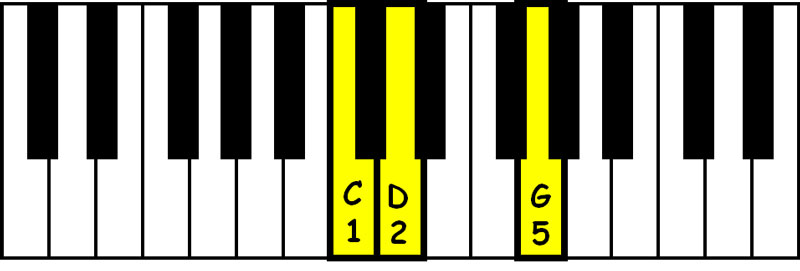
Sus2 Chord (1-2-5)
For a Csus2 chord…
back to… Table of Contents
Major 7, add 9 Chord (1-3-5-7-9)
Yes, any number of notes is possible…
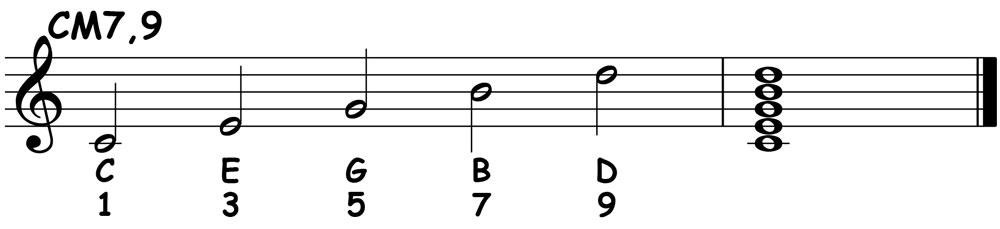
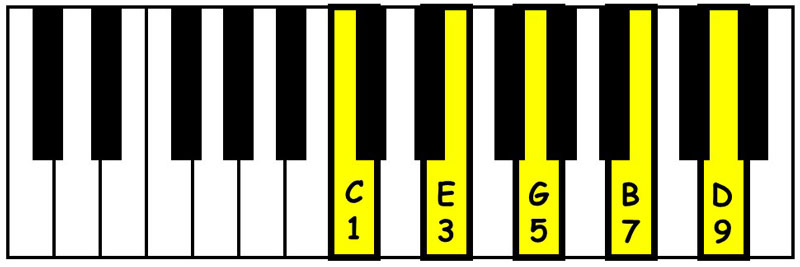
back to… Table of Contents
Dominant 7th, #9 Chord (1-3-b7-#9)
It sometimes makes musical sense to leave otherwise expected notes (such as the 5) out because they don’t add much and kind of get in the way…

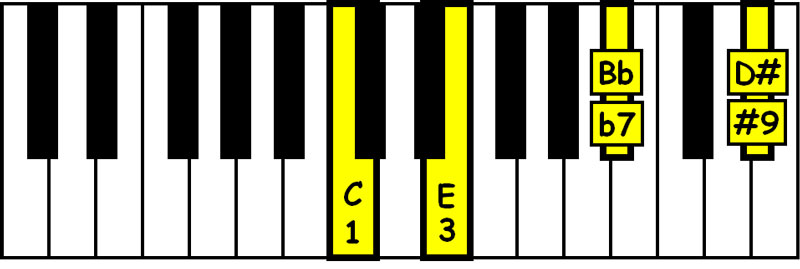
back to… Table of Contents
Special Note
Don’t let this gallery limit your thinking. Any combination and any number of notes (and therefore any chord structure) is theoretically possible.
back to… Table of Contents
Excellent
Thanks a bunch for the positive feedback, Benson. It gives me great joy to know I’ve been of service.