My name is Frank Peter, a semi-pro piano player, teacher, writer, photographer, volunteer, philanthropist, and sole creator of Piano-ology…
Table of Contents
What Music Means to Me
I LOVE music. And have made it a big part of my life because it challenges and excites so many things that make me feel alive.
I do not consider myself to be “talented”. I don’t have perfect pitch. Technique did not come naturally to me. I’ve overcome problems with rhythm. My memory is so-so. I enjoy performing even though I still deal with performance anxiety. But I’ve worked very hard to get where I am today and take immense pride in never giving up when things get tough.

Whether as student, teacher, composer, or performer, music has greatly enriched my life in countless ways and continues to be food for my body, mind, and spirit.

And it gives me great joy to share my love and knowledge of music with others so that they, too, can fall in love with it and realize their full potential… not only as musicians, but as self-actualized human beings.
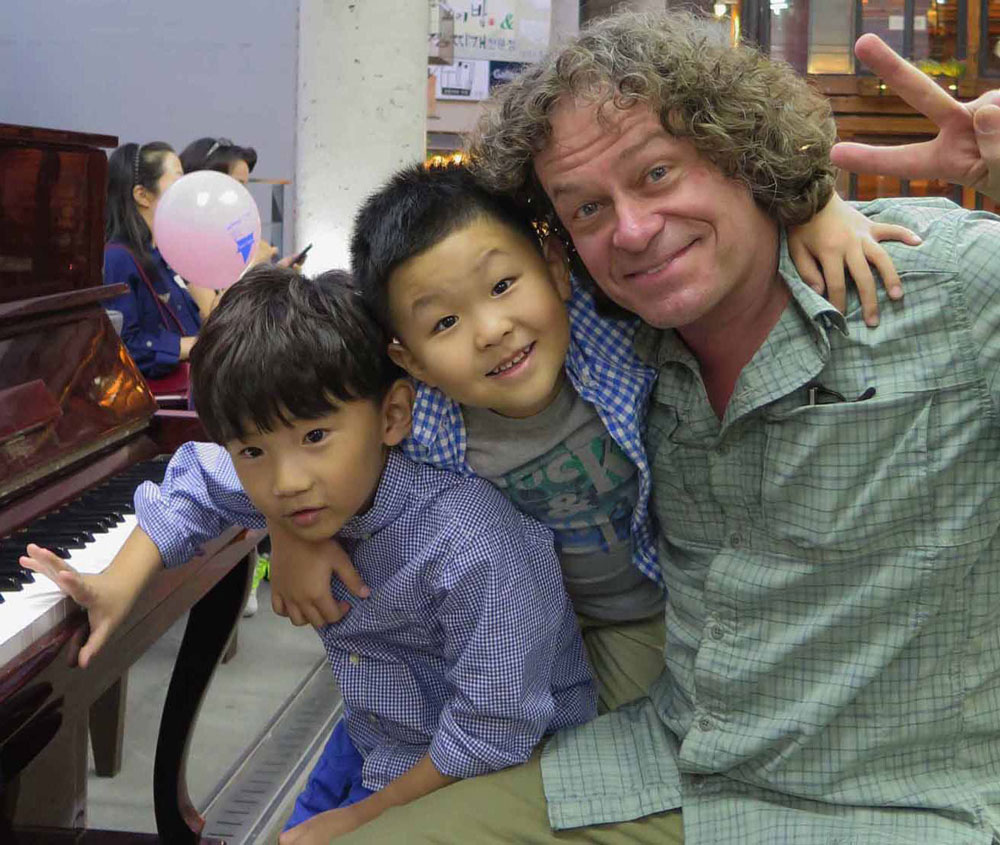
My gift is LOVE… love of life, love of music, and love of people.
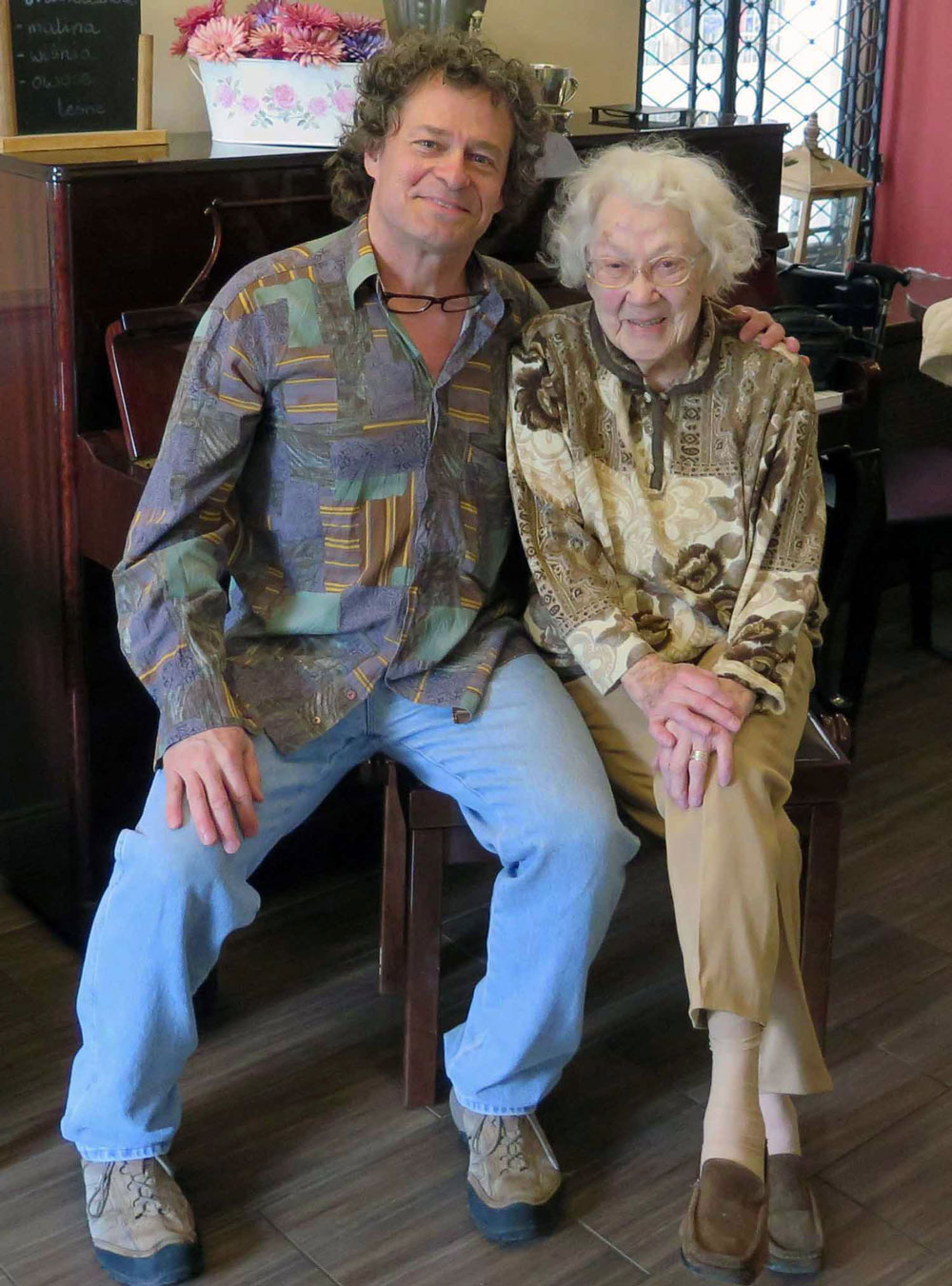
And I play, study, and teach music for personal growth, fraternity, and peace.


back to… Table of Contents
What Teaching Means to Me
Teaching is my greatest joy because it integrates so many values that are most important to me: freedom, self-awareness, discipline, self-improvement, creativity, self-expression, fun, adventure, education, connection, courage, and service.
back to… Table of Contents
My Teaching Philosophy
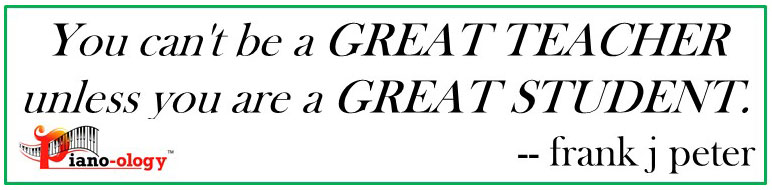
The bedrock of my teaching philosophy is as simple as it is challenging…
back to… Table of Contents
My Credentials
I have no musical degrees or diplomas, no credentials in the conventional sense. My credibility stems from the diversity and authenticity of my unique smorgasbord of musical and life experiences. And my real claim to fame is that I profoundly understand your frustrations as a student because I’ve struggled with the very same things myself—reading, memorization, theory, ear training, technique, rhythm, and stage fright— and I still remember how [unnecessarily] difficult and disheartening everything felt at the time. That said, I will not bore you by touting my credentials. Neither am I asking you to just trust me. I’m just going to let the lessons speak for themselves.
Piano-ology is the fruit of countless cycles of frustration and joy, repeated bouts with self-doubt, thousands of hours and thousands of dollars spent over three decades on books, recordings, videos, magazines, private lessons, independent research, college classes, and a huge amount of plain old hard work.

Piano-ology is the fruit my unrelenting commitment to fuss over things until they make sense–separating the bogus and the authentic and gleaning the signal from the noise. Forever in search of the good, true, and beautiful–not just in the world of music but in life in general. In a phrase, Piano-ology is frustration transformed into joy.
Special Note from Frank: I will allow the effectiveness of my teaching practice (not my credentials) to speak for itself.
back to… Table of Contents
How I Learned How to Play
As long as I can remember, I have always loved music. Here, to best of my recollection is how I’ve come to make music a big part of my life…
- My earliest musical memory was at the age of five in the cellar of my childhood buddy Scott’s cellar, when and where we “squandered” an entire day playing his dad’s stack of 45 rpm fifties records on an old beaten-up moldy turntable. We danced around like crazy.
- My first experience creating music: First grade. Flutophones. I learned how play a few simple tunes and was eventually given the honor of directing the flutophone orchestra, wearing a red blazer with baton in hand.
- Sadly, the rest of my grammar school years were a musical black hole. Perhaps nobody noticed my love of music. Perhaps they all sincerely believed that there were more important things to do.
- Fortunately, my parents had a spinet piano in the house. I never took lessons, but I would dabble over the years, picking out a few simple tunes by ear. Only now do I see the profound importance of having access to a real musical instrument.
- During my high school years, I taught myself how to read music (badly) and played a few easy songs by ear (actually by trial and error), but I was horribly frustrated because I really couldn’t play much of anything.
- In college, my fascination with music continued and I decided to study music theory and music history for my liberal arts electives while getting an engineering degree. Still, I knew almost nothing about the piano and so little about what really makes music tick.
- After graduation, I immediately jumped into an engineering career… and my sporadic musical life went back into hibernation, until…
- At the age of twenty-eight, I got invited to a jam session by some friends from work who had a band. I was amazed that a bunch of people could just show up and start playing together without sheet music… and committed then and there to learn what this music thing was really all about. I no longer wanted to just listen to music. I wanted to participate in the world of music, just like I had in first grade, so…
- I bought a very cheesy electric piano (it didn’t even have full sized keys), started showing up to the jam sessions, and learned something new every week. After about a year, I could play some simple blues, rock, and country music licks in a handful of keys. After a couple more years, I got good enough that they invited me to join the band. I was shocked and honored and scared to death.
- I played my first gig (at a grungy, softcore biker bar) the week before my thirtieth birthday. I didn’t eat or sleep for days beforehand. Despite my nausea and terror, I survived and realized that it’s all part of the process.
- Through a semi-miraculous series of coincidences, I met my first piano teacher and took my first piano lesson at the age of thirty-two. My life, musically and otherwise, has been expanding ever since.
- I’ve had only a handful of private teachers over the years. I learned something from each of their unique influences, then quietly moved on to learn other things. Alas, none of them taught me how to practice. And none of them taught me anything about technique. And so I decided that I would have to teach myself if I wanted to get good.
- And so, I bought and read dozens of books and watched as many videos on theory, technique, styles, ear training, and improvisation… some worthwhile, most not so. Along the way I learned that the music library is full of musical untruths, that traditions die hard, and that the ability to market and sell something does not make something valuable.
- I’ve studied biomechanics, somatics, and the Alexander Technique–each giving me deep practical understanding of how your piano playing body moves.
- On the jazz front, I bought and studied dozens of improvisation books and play along packages (Aebersold, David Baker, Bert Ligon, etc.). While I learned the basics of the jazz language, I always hit the same brick wall and disconnect: Almost total emphasis on left-brain constructs (knowledge) and almost no emphasis on right-brain experiences (ear training), and performance (skill).
- I bought some of the Dick Grove “School without Walls” CDs, which introduced me to Solfege ear training and to the notion and importance of having “flexible” ears.
- I bought “the” perfect pitch course and gave it an honest hearing. It did not work for me. (My perfect pitch experiences are discussed at length on our aural comprehension pages).
- I took two ear-training classes and a blues-rock improv class at Berklee music school on-line. There I learned two huge (albeit expensive) lessons: 1) the importance of singing out loud when doing ear training and 2) the priority of rhythmic groove over flash when improvising. Also, Berklee confirmed that my approaches to ear training (using Solfege and Roman Numeral Analysis) was on the right track.
- I’ve studied educational psychology extensively at the university level which gives me a deep practical understanding of how your brain works. (Piano-ology is infused with these discoveries and principles in a way that is largely incidental and invisible.)
- During all the above, no musical skills came naturally to me. I’ve struggled with every aspect of musicianship: technique, rhythm, theory, reading, memorization, performance, interpretation, and ear training. But in the torturous process of overcoming these obstacles, I discovered a priceless lesson that goes way beyond playing the piano: We are all far more capable than we realize… and that “You either have it or you don’t!” is a poisonous myth that tragically prevents us from reaching our full potential.
- Along the way, I’ve played in a variety of blues, rock, variety, and jazz bands… where I learned tons of new music, how to manage performance anxiety, and a bit about the ugly business side of music making.
- I started teaching music at the age of forty and have loved it ever since. Teaching has made me a much better player because each lesson is an experiment in truth that forces me to be honest and to understand things deeply enough and clearly enough to be able to share them with others so that they, too, will understand.
- I retired from my engineering career on my fiftieth birthday in order to pursue my authentic dreams. Piano-ology… freely sharing what I have learned about music, piano, and life over the years… is one of those dreams. Piano-ology is not perfect, but it is honest.
- My continuing goal is to cultivate my uniqueness as a musician and human being: teaching in a way that only I can teach and making music that only I can make.
- To that end I’ve never stopped being a serious student. As my time and energy allow, I continue to refine my technique, develop my ears, tighten my rhythm, and expand my improvisation vocabulary in many genres.
- These days, my greatest musical pleasure and privilege is to do live Zoom Webcam Lessons with some wonderful students (and human beings) from all around the world!
- My musical journey has taught me many priceless lessons, but the most important lesson of all is that LOVE, not talent, is the real gift… an attitude that has served me well not just in music but in life in general.
back to… Table of Contents
learn more… Hear Your Teacher Play